
Suzuki’s Playing the Long Game, Will Build Another Massive Factory In India
It wants to boost its made-in-India production by another 750,000 units per year.

In the wonderful world of motorcycles, it can be all too easy to get caught up in the bling and the flash. Radical new tech, wild performance figures, head-turning designs—they’re the headline grabbers. Brands like Ducati, BMW, and Yamaha are constantly pushing the boundaries, fighting over who can squeeze the most horsepower out of a twin or who can load the most electronics onto a lightweight chassis.
And then there’s Suzuki.
No headline-grabbing concept bikes. No insane supercharged four-cylinder monsters. No ultra-premium adventure bikes with ten million riding modes. On the surface, it might even seem like Suzuki’s been sitting on its laurels, content to let its rivals duke it out in the bleeding-edge arms race.

Suzuki's bikes always seem to be at least a generation behind in terms of tech, but is that really such a bad thing?
But step back and take a wider view, and something else starts to take shape. A different kind of strategy. One that doesn’t scream for attention, but is arguably more important.
You see, just this week, Suzuki announced it’s building a second motorcycle factory in India. Set to rise in Kharkhoda, Haryana, this massive new facility (worth nearly $137 million) will add another 750,000 units of annual production capacity by 2027. That’s no small feat, and it’s not a flashy one either. But it’s deeply telling.
Suzuki hasn’t revealed which models the new factory will produce just yet, but given the market context, it’s not hard to guess. Expect scooters like the Access and Burgman Street to play a big role, alongside small-displacement commuters and maybe even the V-Strom SX or Gixxer series. These are high-demand bikes in India and other Asian markets. And let’s not rule out the possibility of electrics, too. The company’s first EV scooter, the e-Burgman, has already been piloted in Tokyo, and India could very well be its launchpad for wider deployment.
The Suzuki V-Strom 250 SX is the most basic, barebones iteration of the ADV bike.

That leads to the next point: this plant likely won’t serve just India. With such a large production footprint, it’s plausible that Suzuki will eventually use it to supply export markets in Southeast Asia, Africa, and Latin America. India has already become a global manufacturing hub for affordable motorcycles, and Suzuki has been known to export from its existing facilities. Adding a second plant just strengthens that play.
And this realization hit me while poring over the announcement: Suzuki isn’t after the flashiest bikes, the most impressive spec sheets, or the sharpest tech. And that’s because it’s playing a different game.
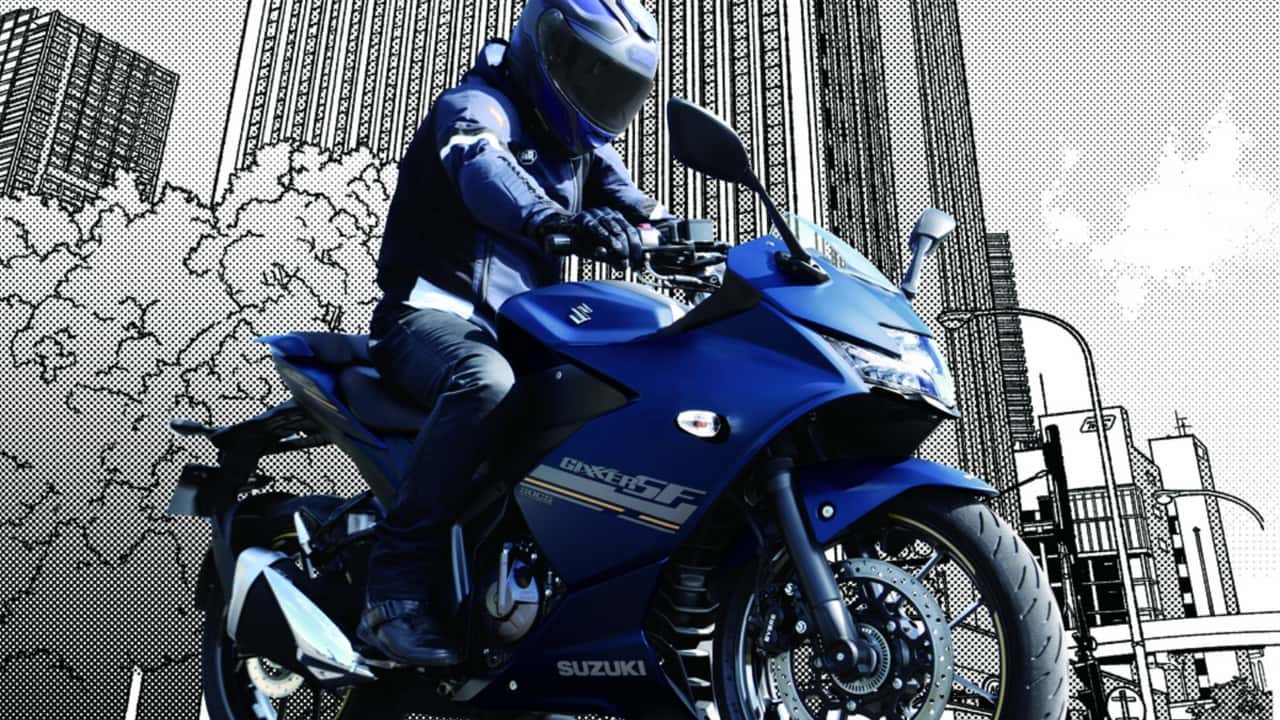
The Suzuki Gixxer 250 takes GSX-R styling and tweaks it to be more city-friendly.
It’s the tractor in a garage full of sportbikes and flashy cars. It’s not the most dazzling machine. In fact, it can easily be overlooked, as it has been so many times in the past. But it’s reliable, versatile, and built to go the distance—no matter what terrain lies ahead. And in a world of hype and horsepower, that kind of quiet resilience might just be the most underrated kind of innovation.
Suzuki isn’t shouting. It’s building. And that’s a story worth paying attention to.
More From Suzuki
Source: Nikkei Asia
RECOMMENDED FOR YOU
Do You Want To Try Suzuki's Delicious Curries? Fly This International Airline ASAP
This Electric Motorcycle Was Almost Vaporware. Now It Wants To Conquer America
A Paralyzed Motorcyclist Just Set a Speed Record on a Turbocharged Hayabusa. Adding to His Long List of Accolades
Not Everyone's Happy About King of the Hammers' New Proposed OHV Trail
This Is The Best-Looking Suzuki Motorcycle In Decades
This Giant Scooter Proves Why You Shouldn't Give Up On Your Projects
This Paralyzed Motorcyclist Just Went 200mph On a Turbo Hayabusa