
Brembo Hyction Carbon Ceramic Discs Come to Motorcycle Racing. Road Superbikes To Follow?
So, when are we getting production carbon ceramic discs?
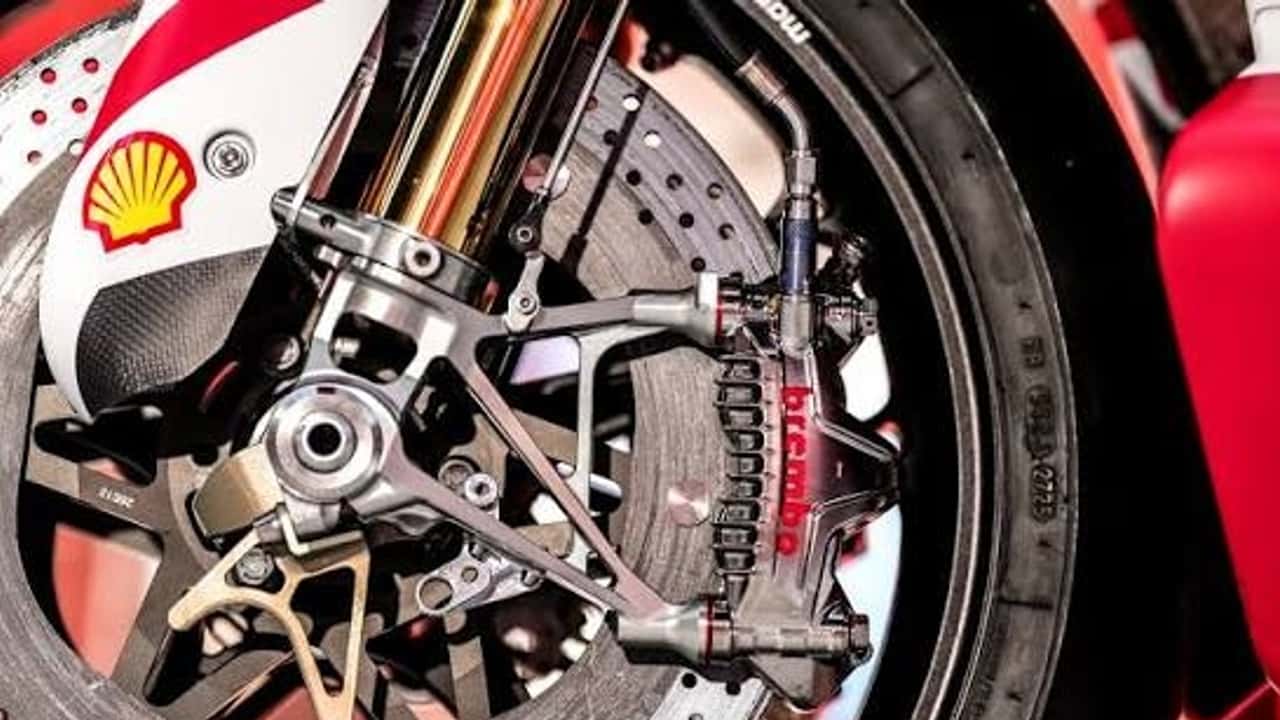

The future of braking is on our doorstep, courtesy of Brembo. The Italian brand is bringing its Hyction, carboceramic brake disc, to the Motul FIM Superbike World Championship (WSBK) for the first time, starting from the 2027 season. This is a huge deal for WSBK riders, but I'll tell you the reason that I also think it's a pivotal moment for everyday riders, like you and me, too.
This marks the first shift in production-based motorcycle racing from steel to carbon-material discs. The carboceramic material should make braking more consistent in all conditions and give the rider more feel ant, this, more control. The discs should also be more durable than their steel counterparts, ensuring better braking throughout every session for every rider, and I do mean every rider.
Not only is Brembo bringing this technology to WSBK, but it is also becoming the exclusive supplier of braking systems for the entire grid. For most manufacturers, this won't be an issue as they already use Brembo components, but for Honda Racing Corporation, it'll mean saying goodbye to Nissin brake parts.
All Things Brembo
Mauro Piccoli, Brembo Chief Marketing Officer, said, In WorldSBK, performance is forged under pressure, corner after corner. With Hyction, we are introducing a technology designed to give riders a more direct and predictable relationship with braking. Becoming the exclusive supplier from 2027 means playing an active role in the technical evolution of the Championship, helping define its new standards. WorldSBK is our ideal laboratory: here we work closely with the best riders and teams in the world, and what we develop on track directly fuels innovation for road applications as well."
Now, it's important to understand that a carboceramic disc is not the same as a carbon-carbon disc that you'd find on a MotoGP bike, but more like the carbon-ceramic discs that you'd find on a supercar. Practically, this means that the Hyction discs should be usable when cold, unlike MotoGP carbon-carbon discs, which provide almost no bite when cold. So, seeing carboceramic discs in action should mean we're one step closer to seeing them on a production road-legal motorcycle; in fact, we already have.
Ducati recently launched the Superleggera V4 Centenario, which, for the first time on a production road-legal motorcycle, featured carbon-ceramic brake discs. This is a unicorn bike that most will never see, not to mind own, in their lifetime, but fear not.
Now that Brembo will be producing the Hyction for WSBK, analyzing a metric ton of data and working out how to make these components more cost-effectively, it's just a matter of time before we see them on a production motorcycle. Bring on the next era of superbikes.

RECOMMENDED FOR YOU

Guy Martin Never Won The Isle Of Man TT, But You Can Buy The Bike That Got Him Closest
Harley-Davidson Is Probably Going to Build That Awesome Cafe Racer Concept
China's CFMoto Wants Into MotoGP. Might Actually Make It Happen
Are You Thinking Of 300 Swapping Your Honda Grom? Watch This First
Want A New Beta Dirt Bike? Why Not Go Racing And Save A Bunch Of Money?
Indian Motorcycles Will Kill A Host of Its Confusing Scout Lineup
The FIM Is Looking For Motorcycle Manufacturers To Spawn Next-Gen Racing Talent