
NASA’s Moon Rover Looks Like The Ultimate Side-By-Side From The Future
NASA’s new Moon rover concepts look like somebody turned a side-by-side into a lunar survival vehicle.
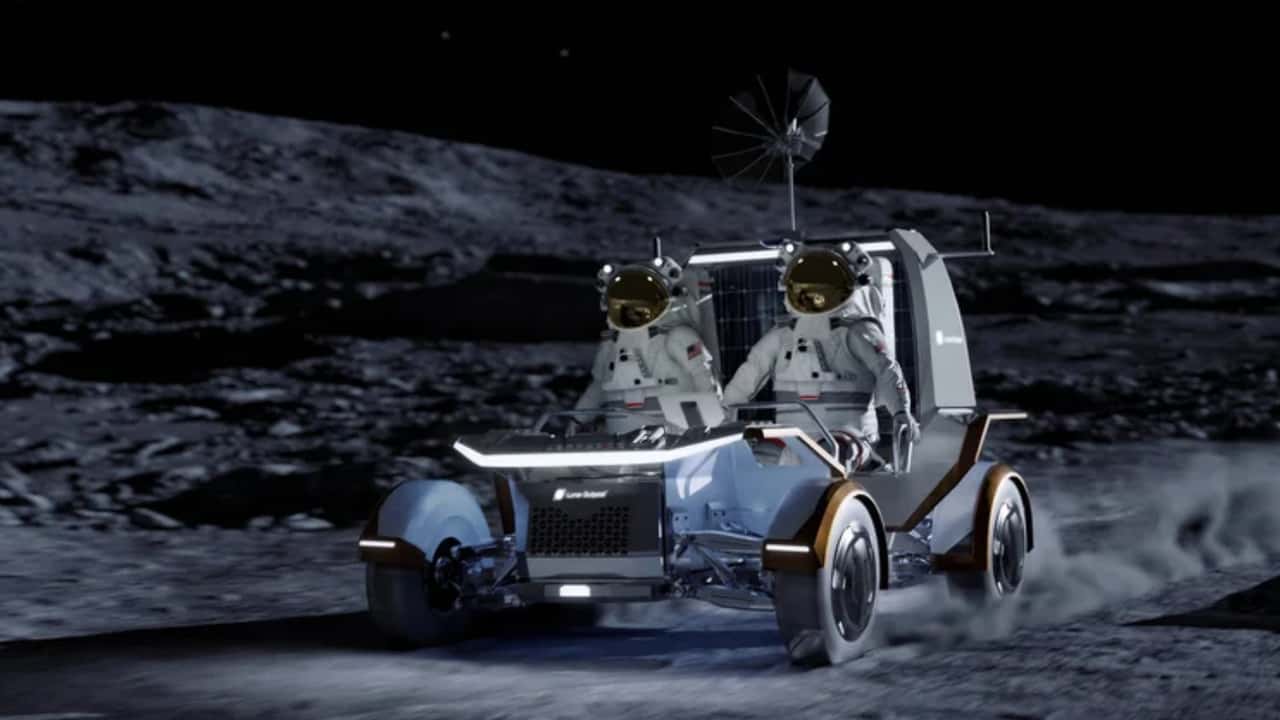

There was a time when side-by-sides were just farm tools. Then they became desert racers. Then they became overlanding rigs with sound systems, light bars, beadlocks, heated seats, and enough suspension travel to jump a small bungalow. Now? Humanity appears to be taking the next logical step: UTVs for outer space.
NASA just unveiled what could be its next-generation Moon rovers, and honestly, they look less like scientific equipment and more like something Polaris, Can-Am, and SpaceX would build after a three-day energy drink binge in the Mojave Desert.
What we’re looking at might actually be the future of off-roading. Literally.
The two finalists are the Pegasus rover from Lunar Outpost and the CLV-1 from Astrolab. Both are designed to carry two astronauts around the lunar surface as part of NASA’s Artemis missions and eventual Moon Base plans. And yes, “Moon Base” is now being discussed with the same calm energy people use when talking about a new Costco branch opening nearby.

And as you would expect, the specs are pretty friggin' wild. Each rover weighs around a ton, costs roughly $220 million, tops out at a blistering 6 miles per hour, and can tackle 20-degree inclines on the surface of the Moon. They’re electric, naturally, because gas stations are still pretty scarce on the lunar south pole. They can be driven by astronauts onboard, remotely operated from Earth, or navigate autonomously if needed. Basically, they’re part UTV, part Mars rover, part Tesla, part Xbox controller.
And unlike today’s side-by-sides that mostly need to survive dunes, mud, and the occasional owner with more confidence than talent, these things need to survive conditions that make Dakar look civilized.
There’s no atmosphere. Temperatures swing from oven-hot to cryogenic nightmare. Radiation is constant. Lunar dust is so sharp and abrasive that Apollo astronauts described it like powdered glass. One mechanical failure several miles from base could become an actual life-or-death situation. No sweat, right?
To Infinity And Beyond?
Interestingly enough, General Motors contributed electrification tech to the Lunar Outpost rover, while Goodyear helped develop the wheels and tire systems. And that’s the fascinating part here. Space exploration is starting to look less like cold-war-era government projects and more like the modern powersports industry. Which is essentially fast development cycles involving lots of private companies developing modular hardware.
NASA’s original plan was to build one ultra-advanced rover designed to last a decade. Now the agency seems more interested in getting simpler machines onto the Moon sooner, learning from them, and improving them continuously. It’s the same philosophy that gave us yearly updates to adventure bikes, UTVs, and rally raid machines.
Only now the test track is the Moon.
And if we put things into perspective, it’s not all too hard to imagine where this all leads decades, or even centuries, from now. Today’s lunar rover is tomorrow’s lunar recreational vehicle. Right now these machines are survival-focused exploration tools. But eventually? Humanity’s first off-world motorsports scene doesn’t sound all that impossible.

Sources: Jalopnik, Lunar Outpost, NASA, Astrolab
RECOMMENDED FOR YOU
There's An AI-Powered, Autonomous Polaris Ranger On the Front Lines In Ukraine
Valentino Rossi Reunited With His Yamaha M1 And MotoGP Fans Lost It
Honda Just Made An Insanely Great, Everyday Side-By-Side, And We Drove It
BMW Unveils A Special Edition R 12 G/S Motorcycle Just For The 2026 GS Trophy Race
Here's How You Can Get More Horsepower In Your New Can-Am Defender
This Solid-State Battery Fix Could Matter More For Motorcycles Than Cars
This Adorable Little UTV Just Got Drafted By the Army. Needs Some Super Serum