
Can-Am's EV Motorcycles Land In The Philippines. Good Luck Finding Somewhere To Charge Them
Electric cars are taking over the Philippines. Now motorcycles want a piece of the charging infrastructure, too. This should be fun.
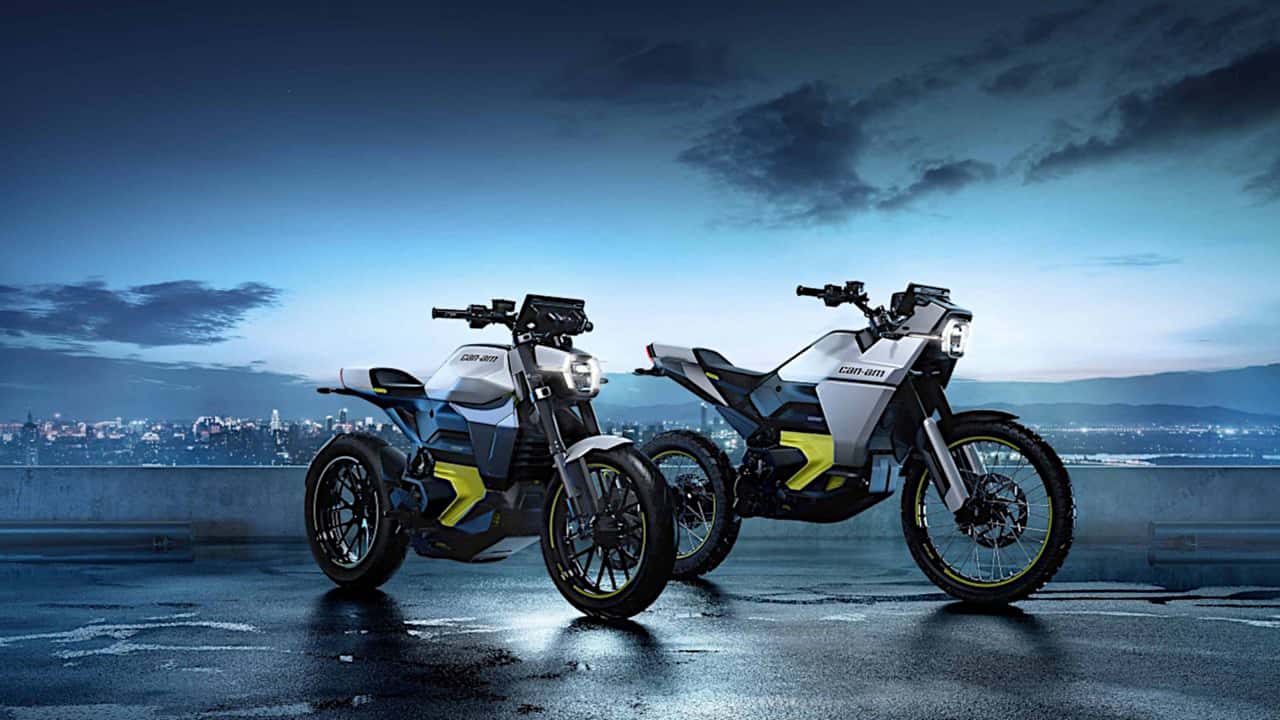

The Philippines is a motorcycle country. We've got millions of them buzzing through traffic, squeezing between cars, and generally keeping the entire country moving despite our best efforts to turn every major road into a parking lot. Meanwhile, electric cars are becoming increasingly common, with BYDs, Teslas, and other EVs popping up everywhere. But electric motorcycles? Those are still pretty rare. And now Can-Am has decided to enter the conversation with two very interesting machines.
We've talked about the Can-Am Pulse and Origin quite a bit here at RideApart. They're the Canadian powersports manufacturer's big return to motorcycles after roughly half a century, only this time without gasoline engines. And now, thanks to local distributor Scan Marine Inc., both 2026 models have officially landed in the Philippines, alongside the electric Outlander ATV. It's a pretty significant move, especially considering how overwhelmingly gasoline-powered our motorcycle market remains.

The Pulse is the urban-focused option, packing an 8.9-kilowatt-hour battery, four riding modes, regenerative braking, and a claimed city range of 100 miles. The Origin takes that same battery and electric powertrain off-road, adding longer-travel suspension, dual-sport tires, and six riding modes. Its claimed city range drops to 90 miles. Both get liquid-cooled battery systems, reverse functionality, and twist-and-go operation.
But here's where things get interesting. These Can-Ams support Level 2 AC charging, the same general technology used by electric cars. Can-Am claims a 20-to-80-percent charge takes around 50 minutes. European-spec motorcycles use Type 2 connectors, which are also found at Philippine public charging stations. The exact connectors fitted to Philippine-market bikes still need confirmation, though, and neither motorcycle supports DC fast charging.
Now, those of you who've been reading my stuff throughout the years would know that I actually live in the Philippines, and watching our EV market grow has been fascinating to say the least. Electric cars are no longer particularly unusual, but finding a convenient public charger can still be a headache. According to the Department of Energy, the country had 1,876 registered EV charging stations as of August 2026. That's progress, sure, but we're talking about an archipelago with thousands of islands, a rapidly expanding EV market, and some truly spectacular traffic.
EVs Worth Watching
Now imagine rolling up to a shopping mall on your Can-Am Pulse, plugging into an available charger, and occupying an entire car-sized parking space. Technically, you're charging an electric vehicle. That's literally what the equipment is for. But will mall security agree? What about the electric car driver waiting behind you? There's no reason to assume motorcycles are universally prohibited, but I can absolutely see this becoming an argument once more electric bikes start showing up.
Of course, there's a perfectly reasonable counterargument. Most electric motorcycle owners will probably charge at home, where the Can-Ams can use ordinary household electricity with the appropriate equipment. For daily commuting, their relatively modest battery capacities could actually make them practical. And if you've got dedicated parking and charging at home (which a large chunk of Filipino commuters do not, for the record), public infrastructure might barely matter. The problem is that not everyone has that luxury, particularly in densely populated cities.
That's what makes Can-Am's Philippine debut pretty fascinating. These motorcycles aren't necessarily the affordable electric transportation revolution the country needs, but they could help expose a question our growing EV ecosystem hasn't really had to confront yet. If we're serious about electrifying transportation, shouldn't motorcycles get access to the same infrastructure as cars? Because like most other Asian countries, motorcycles are the lifeblood of mobility in the Philippines.

Sources: Top Gear Philippines, Business Mirror
RECOMMENDED FOR YOU
I Wanted To Love EV Motorcycles. We Need Better Infrastructure
This Electric Motorcycle Was Almost Vaporware. Now It Wants To Conquer America
Honda's New CBR500R Four Might Have China To Thank For Its Existence
Not Everyone's Happy About King of the Hammers' New Proposed OHV Trail
I Tried MapQuest's New Surveillance Tracking Feature. Good Idea, But The App Keeps Crashing
This Giant Scooter Proves Why You Shouldn't Give Up On Your Projects
This Electric Motorcycle Just Traveled 271 Miles On One Charge. But There's A Catch