
This Bonneville Salt Flats Doc Is Short and Bittersweet Because They're Disappearing Faster Than Ever
Say the name "Bonneville" and petrolheads think of two things: The legendary salt flats, and vehicles named for them. Here's a love letter.
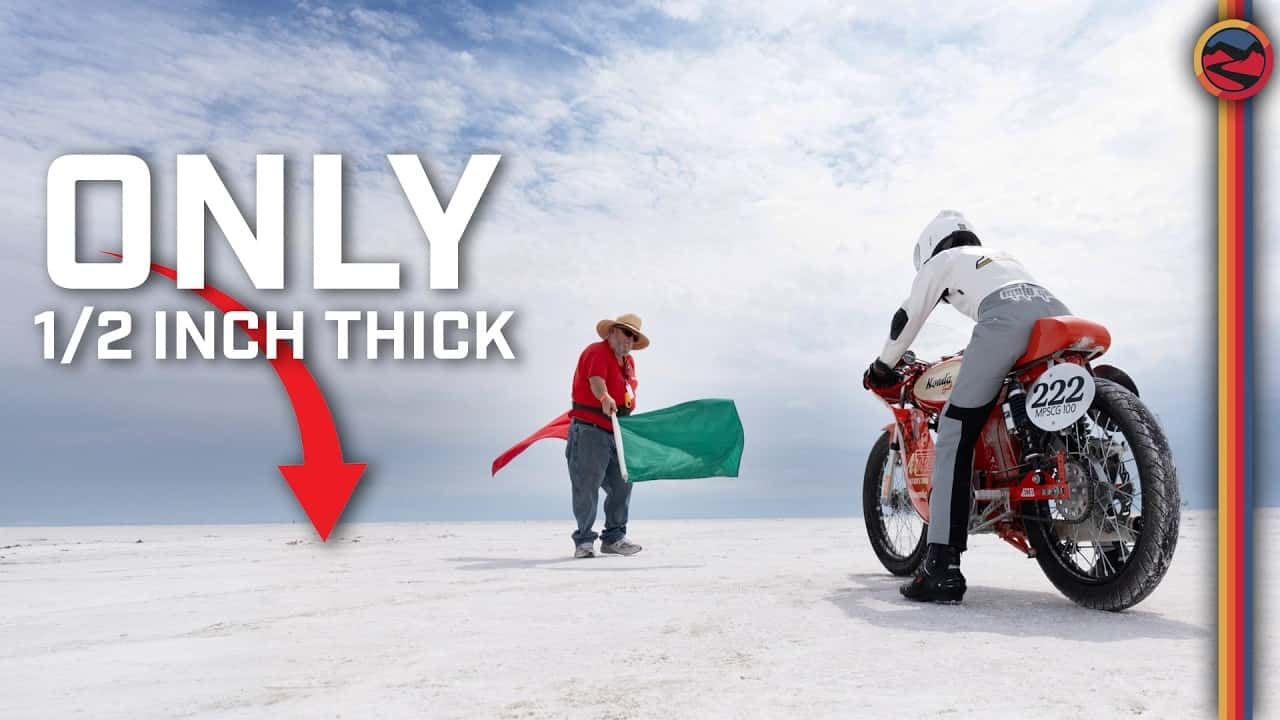

There is nothing on earth like salt, and there are too many reasons to reasonably count as to why petrolheads everywhere hold the Bonneville Salt Flats in such high regard. No matter what else you believe in, it's the next best thing to a holy place for many.
A new short film from Canyon Chasers dives into that a bit, poking just under the rough and crunchy crust to shine a light on the history, the culture, and the ongoing threats that are systematically eroding this legendary place. The trouble is, like so many things, it's a complex topic filled with nuance, and in our current era of 'can't we do everything quicker?' , important points often get lost in the sauce. Or the slush, in the case of Bonneville.
The facts are these: Since the US Geological Survey has been measuring, maximum salt crust thickness at the Bonneville Salt Flats measured around 7 feet (!) back in 1960. Clearly, over 75 years have passed since that measurement, so a lot was bound to change; that's a long time for any place.
The official measurement of salt crust depth was down to 5.5 feet in 1988, which certainly shows erosion over time. In 2015, Scientific American reported that the depth in the central basin of the Flats (where the salt is the thickest) was down to a depth of 30 cm (or just under a foot, if you aren't about that metric life).
And now, says CC in this doc, it's down to just half an inch in some places.
A Growing, Shrinking Problem
To be clear, depth isn't and has never been uniform across the Flats. This isn't like a raised bed garden where you can control soil depth across the entire expanse with relative ease. But still, organizations like Save The Salt, representing stakeholders with multiple viewpoints who all agree that the Salt Flats are worth saving, have been working to identify and implement practical solutions for years.
As I mentioned above, it's a complex problem, but one major component is simple math: Due to various reasons, not the least of which is brine withdrawal due to the nearby location of a longtime potash mining operation that's changed ownership a few times, salt is being lost more quickly than it is being replaced.
If you keep taking away more of a thing than it can produce, you will eventually be left with nothing. And no amount of arguing or lobbying or sticking your head in the sand and plugging your ears can change that fact.
So, this doc is bittersweet, because while a whole lot of people care about the Bonneville Salt Flats, and a whole lot of efforts have been underway to try to remedy the situation, there are multiple factors in play here, including climate change. It's sort of like a whack-a-mole situation; try to address one problem, and there are still more just waiting to pop out and wreck your day.
There's a lot to be said about the unique culture of the place, and how it's inspired generations of speed-curious and speed-obsessed folks to head out near Wendover, Utah and get involved. And you'll see a lot of it here in this doc, in just under 15 minutes that are well worth your time.

RECOMMENDED FOR YOU

Valentino Rossi Reunited With His Yamaha M1 And MotoGP Fans Lost It
A Major Used Motorcycle Chain Just Went Into Administration. Here's What That Means For Motorcyclists
This Tiny Retro Sidecar Motorcycle Is Exactly The Kind Of Weird We Need More Of
Lidl Is Selling a Ridiculously Affordable Motorcycle Paddock Stand. But There’s a Catch
Honda Just Opened This Rad Moto Cafe In Japan After Its Huge Success In Thailand
This Isn't A Super Cub. But What If It Took Over The World In An Alternate Universe?
Richard Hammond Just Became Every Royal Enfield Rider’s Favorite TV Presenter Again