
This California Company Thinks It Can Crack Solid-State Battery Tech For Good
QuantumScape’s push toward scalable production hints at lighter, more compact electric bikes if it all works.
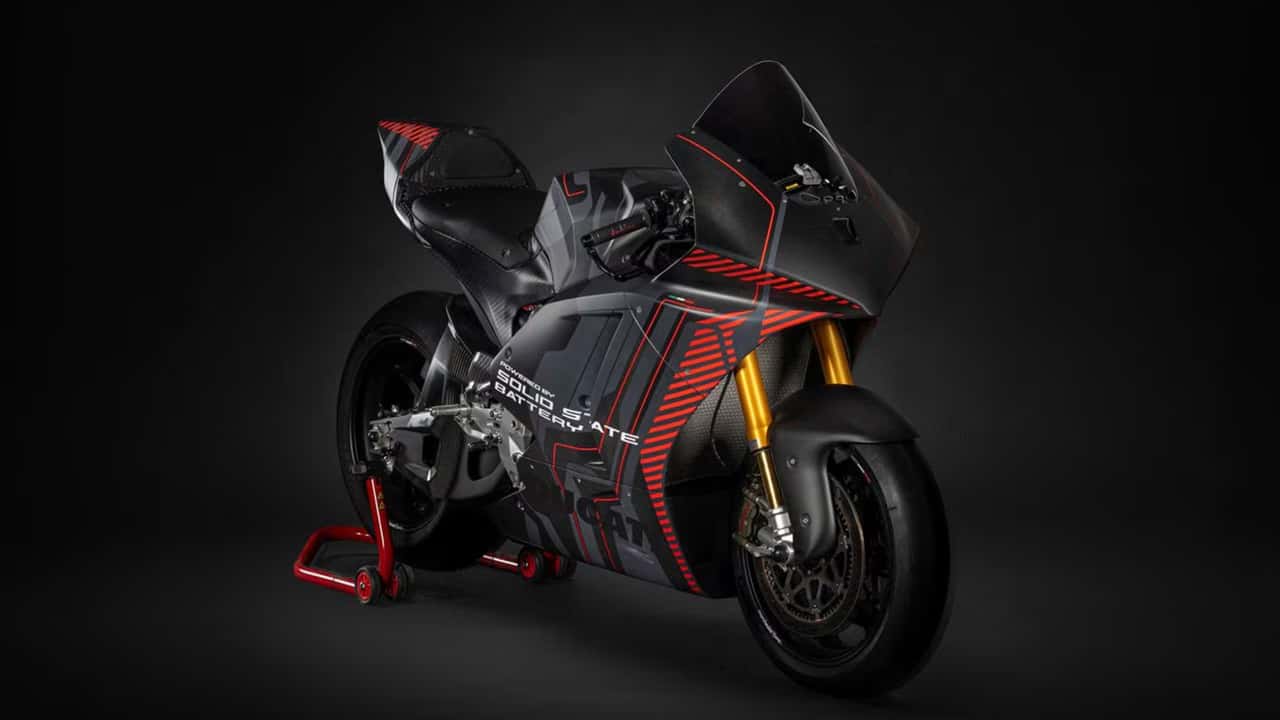

Solid state batteries usually dominate headlines in the context of electric cars. You know the drill: Longer range, faster charging, better safety. That’s the narrative most of us are used to. But when our friends at InsideEVs recently got up close with QuantumScape during a company event in California, it became clear this story could matter just as much for motorcycles and powersports machinery as it does for crossovers.
QuantumScape, founded in 2010 and backed early by Volkswagen, has been one of the most closely watched names in the solid state race. Instead of building complete vehicles, the company is focused entirely on developing lithium metal solid state battery cells that can be produced at scale and supplied or licensed to major manufacturers. The mission is simple on paper: make solid state real in factories, not just in labs.
Now, here's where things get serious. QuantumScape recently showcased its Eagle pilot production line in San Jose. This isn't a gigafactory churning out gigawatt hours of cells just yet. Rather, it’s a pilot scale manufacturing line designed to prove repeatability, yield, and quality control. Think of it as a proof-of-concept. You and I both know that solid state tech has shown promise for years, but scaling it consistently has always been the hard part.

QuantumScape's batteries claim some seriously impressive charging time.
The company’s approach replaces the liquid electrolyte found in traditional lithium ion batteries with a solid ceramic separator. That enables the use of a lithium metal anode, which can significantly increase energy density while reducing reliance on flammable materials. QuantumScape has said its latest cells can charge from 10 to 80 percent in about 15 minutes under the right conditions, while maintaining competitive cycle life. Now the focus is on making that performance reproducible at scale.
Most of the conversation around this centers on cars. Higher energy density means longer range for a two-ton crossover. Faster charging reduces road trip downtime. Improved safety helps ease consumer hesitation. But electric motorcycles operate under far tighter constraints, and the truth is, the two-wheeler industry stands to gain more from this tech.
Even the MotoE race bike developed by Ducati shows how demanding the packaging challenge really is. The Ducati V21L weighs roughly 496 pounds, and that’s a purpose-built race machine engineered at the highest level. A substantial portion of that mass comes from the battery pack. Engineers can optimize chassis geometry and suspension all they want, but battery weight still defines the experience.
The Ducati V21L uses a solid-state battery. Remember, Ducati is owned by Volkswagen, and QuantumScape is backed by Volkswagen. Coincidence? I think not.
And this is where solid state starts to look especially relevant. Electric motorcycles today are shaped by battery bulk. A large street legal electric bike can easily exceed 500 pounds. On smaller machines, there’s barely enough room between the wheels and under the rider to house enough cells for usable range. Frames have to stay narrow and ergonomic, yet they’re often built around a heavy rectangular block of energy storage.
If solid state cells deliver meaningfully higher energy density, manufacturers gain options. They can keep the same physical pack size and boost range. Or they can shrink the pack and drop weight. On a motorcycle, shedding even 20 to 30 pounds is transformative. It sharpens turn in, improves braking feel, and makes the bike more approachable at low speeds.
Packaging flexibility is just as important. A more compact battery could allow sportbikes to stay slim instead of thick through the midsection. Adventure bikes could gain range without ballooning in size. Electric dirt bikes, ATVs, and UTVs could benefit from lighter, more centralized mass, improving agility and reducing fatigue during aggressive riding.

The V21L is proof that solid-state batteries can withstand the highest level of performance.
There’s also the safety angle. Riders sit directly above or around the battery pack. Moving away from flammable liquid electrolytes could offer additional peace of mind, especially in high impact environments common in racing and off road use.
It's important to realize that QuantumScape is still in the pilot production phase. The Eagle line is about proving manufacturability, not declaring victory. Scaling to millions of cells annually remains a significant challenge, and timelines across the industry are fluid.
But if companies like QuantumScape can translate solid state chemistry into reliable mass production, the impact may extend well beyond electric cars. In segments where every pound and every cubic inch matter, like motorcycles and powersports, better batteries aren't just about range. They’re about restoring the lightness, balance, and feel that riders care about most.
Is The Future In Good Hands?
Sources: QuantumScape, InsideEVs
RECOMMENDED FOR YOU
This Solid-State Battery Fix Could Matter More For Motorcycles Than Cars
Valentino Rossi Reunited With His Yamaha M1 And MotoGP Fans Lost It
CFMoto’s Future Superbikes Are Getting Brembo Brakes. That Should Tell You The Company's Direction
BMW Unveils A Special Edition R 12 G/S Motorcycle Just For The 2026 GS Trophy Race
Honda Doesn't Just Want One Supercharged Motorcycle, It Wants All Of Them
Here's The Triumph Speed Twin 1200 TFC, And It's Dripping With Factory Performance Upgrades
Honda Might Have Just Made Its Smartest EV Move Yet, And Almost Nobody Noticed