
Honda’s Investing Big In Its Brazil Factory, Wants Even Bigger Market Share
Honda holds a staggering 67-percent market share in Brazil, and wants to expand that further by investing $300-million in upgrading its factory.

If you’ve spent most of your riding life in the US, it’s easy to see motorcycles as weekend toys or expensive hobbies. They’re the kind of machines you ride for fun, not because you need to. But take a step outside the States and the story changes completely. In much of the world, motorcycles aren’t luxuries. They’re lifelines. In places like Brazil, India, and the Philippines, two wheels are how people work, travel, and live day to day.
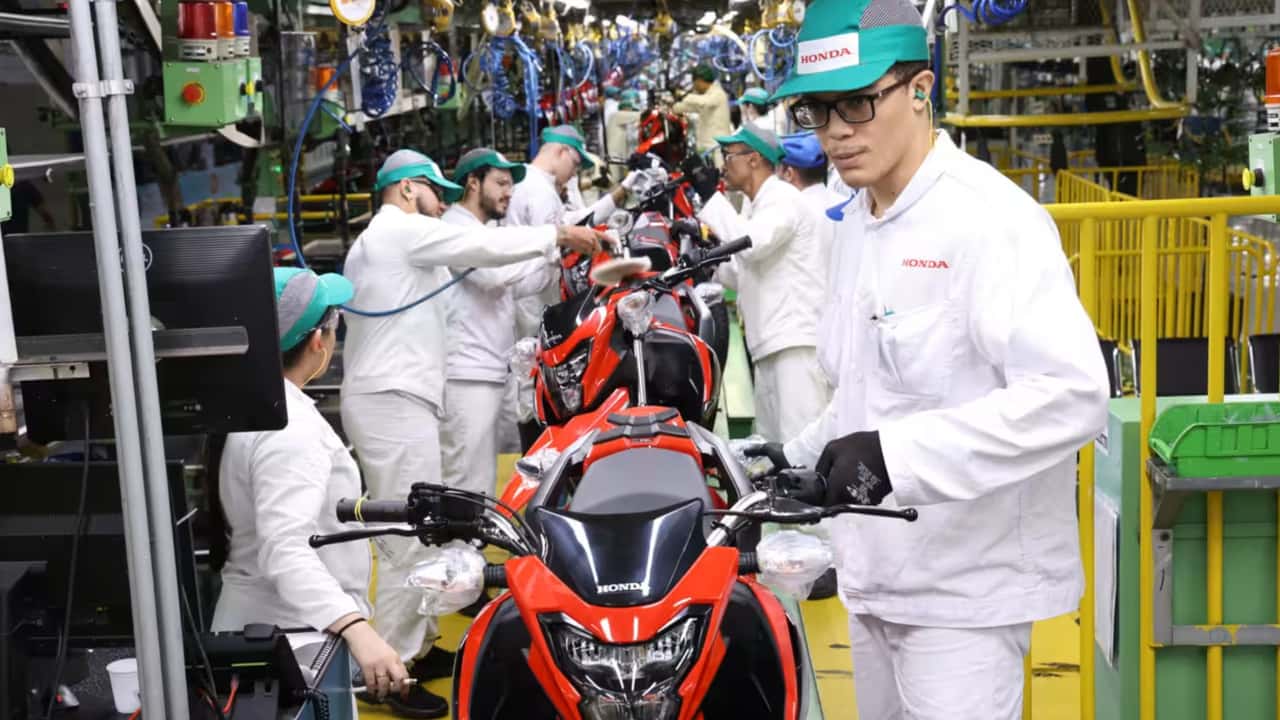
It’s in that context that Honda’s latest move in Brazil really hits differently. The company just announced a $300 million investment in its massive Manaus factory, expanding capacity from 1.4 million to 1.6 million units a year by 2026. That’s a scale that’s hard to wrap your head around if you’re used to seeing motorcycles as niche products.
Honda already owns about 67 percent of Brazil’s motorcycle market, which means nearly seven out of every ten bikes sold there wear the winged logo. For a company that built its reputation on reliability and practicality, that kind of dominance makes perfect sense.

Honda's Brazil facility occupies an 800,000-sqaure-meter footprint, and produces around 1.6 million two-wheelers per year
But what really stands out, though, is how this kind of scale puts things in perspective. As someone from the Philippines, I’m used to it. Motorcycles are everywhere here. They’re how people get to work, pick up groceries, and bring their kids to school. They’re delivery vehicles, commuter shuttles, and family haulers all rolled into one. But for riders from countries where bikes are mostly for recreation, seeing this level of dependence on two-wheelers can be mind-blowing.
When you visit a city like Manila, Jakarta, or São Paulo, the soundscape alone tells you how central motorcycles are to daily life. There’s a rhythm to it: the buzz of small single-cylinder engines, the chaotic flow of scooters weaving through traffic, the sight of riders wearing backpacks, or with baskets tied to the back of their bikes filled with food deliveries or parcels. It’s not just about transportation. It’s mobility in its purest, most essential form.
And that’s what makes Honda’s expansion in Brazil such a big deal, not just for the company but for the motorcycle industry as a whole. It shows where the center of gravity really is. The growth isn’t happening in markets that treat bikes as weekend escapes. It’s in places where motorcycles keep economies moving. The demand for affordable, fuel-efficient, and easy-to-maintain machines isn’t slowing down, and brands like Honda know that better than anyone.

For riders in the US, this reality has an interesting side effect. It means there’s a whole world of motorcycles that never make it to American showrooms. These small, practical, and incredibly versatile motorcycles often stay confined to markets where they’re needed most. On one hand, that’s exciting because it shows how much potential for change there still is. The growing popularity of bikes like Royal Enfield’s 350s and Triumph’s 400s hints that more riders in the US are starting to appreciate smaller, simpler machines again.
Scooters and commuters are the backbone of Brazil's mobility sector.
On the other hand, however, it’s also a little disappointing. Many of these bikes would make perfect sense for everyday American riders who want something light, fun, and economical. They’re easy to live with, cheap to run, and surprisingly capable. But they’re locked away behind market strategies and emissions regulations. Meanwhile, in countries like Brazil and the Philippines, they’re everywhere, proving that motorcycles don’t have to be big or expensive to be meaningful.
Honda’s move in Manaus is a reflection of that truth. It’s a bet on the real global market, the one powered by millions of riders who see motorcycles not as toys but as tools for living, and the one that lets enthusiast-focused markets like the US keep on going. It’s a reminder that the future of motorcycling doesn’t always come from the top down. Sometimes, it’s already happening in places where two wheels are simply woven into daily life, not out of choice, but necessity.
More From All Over The World
Sources: Nikkei Asia, Honda
RECOMMENDED FOR YOU
Honda's New CBR500R Four Might Have China To Thank For Its Existence
This Electric Motorcycle Was Almost Vaporware. Now It Wants To Conquer America
Blink And You'll Miss One Of The Most Legendary Motorbike and Car Pairings Ever For Sale
Not Everyone's Happy About King of the Hammers' New Proposed OHV Trail
This Is Honda's All-New CBR500R Four. And You Can Buy It In Europe
This Giant Scooter Proves Why You Shouldn't Give Up On Your Projects
Honda's Swappable Electric Motorcycle Batteries Could Become Everyone's Batteries