
It Took Norton 100 Prototypes To Get Its New Manx R Superbike Right
The work Norton put into researching and developing the Manx R is far more extensive than you think, and involved 100 prototypes.
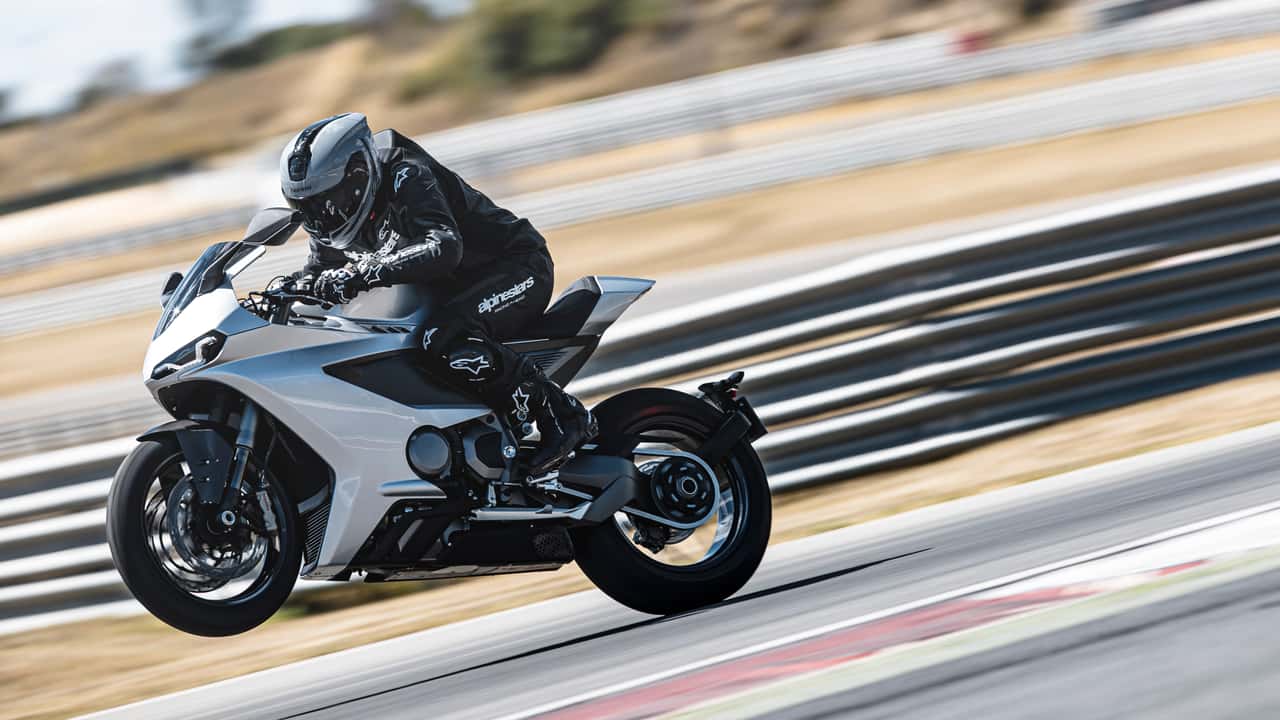

Norton's is a storied brand, and the stories haven't always been comprised of ideal situations. After several bankruptcies and a comeback under TVS ownership that required a few years to produce a totally new range of bikes, the next shot had to hit the bullseye. Norton couldn't offer up an all-new superbike, in the form of the Manx R, that cost upward of $50,000 in some guises without being absolutely sure it'd be a hit.
Of course, Norton didn't blindly launch a $50,000 superbike, but how much research and development it put into the Manx R is astonishing. The brand went through 100 prototype motorcycles, covered more than 500,000 km (310,685 miles) of development and validation, with 20,000 kms (12,427 miles) being on track.
More than 700 tests took place across five countries, all in the pursuit of one goal: creating a superbike that delivers engaging performance that is usable on real roads without compromising track capability. To achieve its goal, Norton used structured feedback from the 50 riders that took part, which varied from everyday enthusiasts to Isle of Man TT champions and Italian Supersport racers.
All Things Norton
To try and make sense of all the data, the same feedback-and-measurement loop was used to refine chassis communication, braking feel and rider-assistance intervention, creating a distinctive and repeatable response across different roads and conditions. This meant that technical targets met in isolation weren't part of the equation, and Norton could take the feedback from riders of different skill levels and apply it consistently to the data.
Brian Gillen, Chief Technical Officer, Norton Motorcycles, said, "If you’re going to ask riders to believe in a new superbike from Norton, you have to put proof on the table. Real mileage, real conditions, and a level of validation that stands up to real scrutiny. But what defined this program was that rider feel was treated as a hard requirement, not a nice-to-have. We didn’t just want data that said the bike was right. We listened hard to our test riders, who consistently described the Manx R as ‘special’. Their reactions kept coming back the same: a real grin factor, an ‘addictive’ V4 exhaust note, and a feeling of connection they described as genuinely different to anything else in the class."
After all the real-world testing, Norton's engineers found that the data showed that more than 98% of riding time occurred between idle and 7,000 rpm, even among fast, experienced riders. This led the team to employ a torque-led philosophy, from the power delivery to the closely stacked gear ratios, to the phased pulse firing order; all to make the bike more engaging to ride in the parts of the rev range that are used the most.
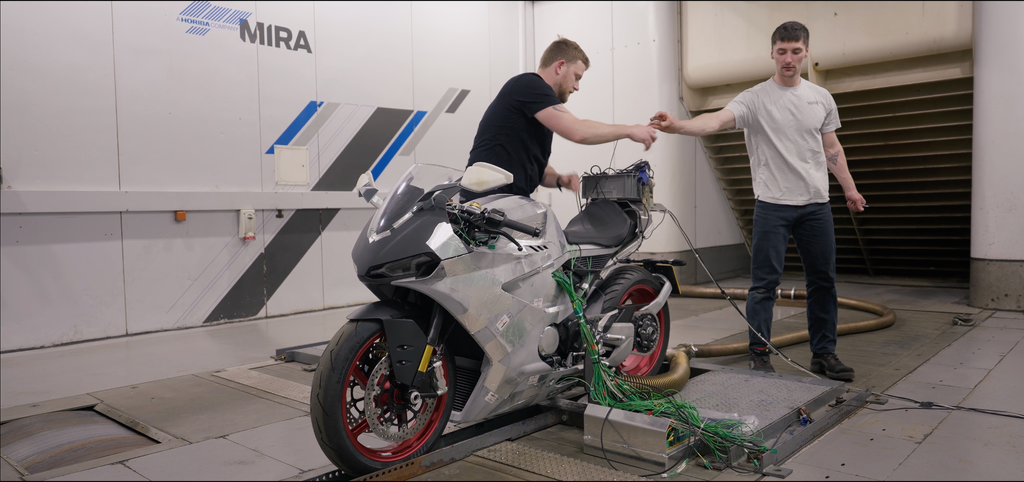
The idea of making the bike more engaging at the speeds we ride at in the real world then extended past the powertrain, and onto the chassis. Norton engineered the Manx R chassis for strong longitudinal rigidity with controlled lateral and torsional flex, rather than pursuing an excessively stiff, narrowly track-focused structure. The aim was to preserve useful road feedback and predictable responses at realistic road speeds while retaining high-load track capability.
Norton had the bike it wanted to make; the last thing it needed to do was make sure it'd survive being ridden in such a manner. Engine durability testing included 100-hour accelerated assessments representing more than 150,000 kms (93,205 miles) of real-world equivalence and more than 40 million crankshaft revolutions. Three motorcycles dedicated to pavé rough-surface fatigue testing each completed 520 laps, correlating to approximately 125,500 kms (77,982 miles) of real-world use. Full strip-down and inspection followed, including dimensional measurement, X-ray inspection and dye-penetrant testing of relevant components.
Say what you will about Norton's past or even the design of the Manx R, but you can't say the manufacturer didn't throw everything it has at making this the best possible real-world superbike to give the brand its resurgence.

RECOMMENDED FOR YOU

Norton's Dealership Concept Comes From The Folks Who Designed Apple's HQ
India’s EV Motorcycle Startup Is Already Selling More Bikes Than Harley-Davidson's LiveWire
First Ride: The Norton Atlas Apex Is Exactly What The Company Needed and Redefines Value
Royal Enfield Wants To Prove You Don’t Need A Giant Bike To Tour America
Bimota Fans Can Finally Buy The Iconic Italian Dream Machines on American Soil
It Looks Like The US Is Getting Yamaha's Sweet Retro Naked Beginner Next Year
Ducati Fills Gap in Panigale Range With V4 SP for 2027