
Ask RideApart: What’s The Difference Between The Honda CBR650R And CBR600RR?
They’re both sportbikes and around 600-ish cc – what really sets them apart?


There are many types of bikes for different kinds of riders, and after a few minutes of research pretty much anyone will be able to tell the difference between a sportbike and an adventure bike. We know that not all motorcycles are woven from the same cloth – or forged from the same metal, if you will, but it can be quite confusing, especially for beginners, to make a decision when it comes to what bike they actually want.
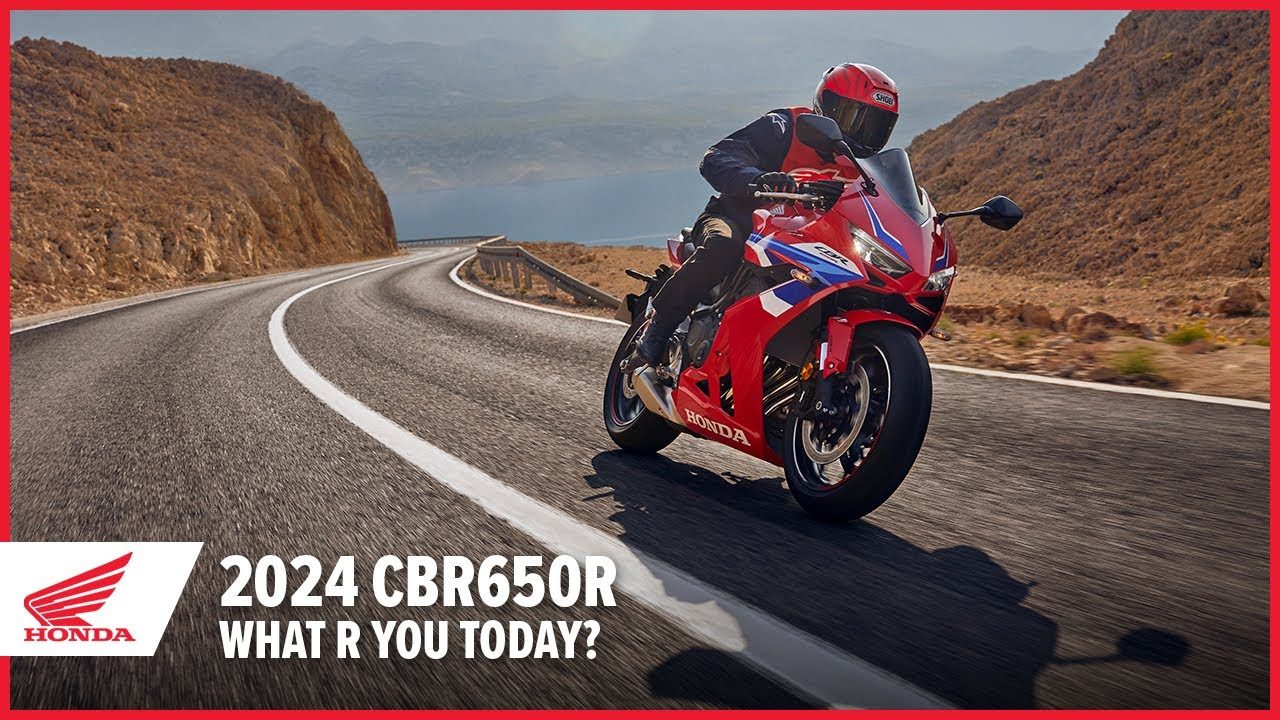
For example, we often get asked about two bikes in Honda’s sportbike catalog, and why one should opt for one or the other. Of course, I’m talking about the CBR650R and CBR600RR. For the uninitiated, the CBR650R may seem like the more premium, and therefore more desirable, machine. After all, it's up by 50 cubes when compared to the CBR600RR, so surely it’s the better bike? Meanwhile, those who know a thing or two about bikes would know that the CBR600RR is in fact the more expensive, performance-oriented machine.

2024 Honda CBR600RR
2024 Honda CBR650R
Well, as it would turn out, the word “better” is subjective, and depends entirely on your wants and needs as a motorcyclist. With that said, let’s take a closer look at the Honda CBR650R and CBR600RR. Let’s take a look at some of the difference between these two sportbikes, and hopefully, after reading this article, you’ll learn a thing or two about these two bikes and make a better-informed decision if you’re eyeing a four-cylinder sportbike bearing the Honda badge.
Performance
The Honda CBR600RR is a far more track-focused machine.
It can be easy to think that these two bikes have similar performance ratings, given the fact that they’re both 600-ish cc, inline-four cylinder engines. However, one of them is tuned more for street use, while the other is essentially a road-legal race bike.
Let’s kick things off with the CBR650R. It’s powered by a 649cc, liquid-cooled, fuel-injected, inline-four engine. It pumps out a maximum of 94 horsepower at 12,000 rpm and 47 pound-feet of torque at 9,500 rpm. It’s by no means a low-power engine, but it isn’t a high-performance, fire-breathing engine either. Rather, it’s a sporty four-banger that’s designed to be enjoyable on the street, while packing enough power for a spirited ride on the twisties or on track.

As for the CBR600RR, well, it’s by far a more potent, race-oriented machine. In terms of performance, it’s rocking a 599cc, liquid-cooled, fuel-injected, inline-four engine with 113 horsepower at 13,000 rpm and 48.7 pound-feet of torque at 11,250 rpm. As such, it’s a far higher-revving engine than that of the 650, and produces more power high up in the rev range. As a consequence however, it feels sluggish and sometimes difficult to manage at lower rpms when compared to the CBR650R.
Ergonomics
Although sporty in nature, the Honda CBR650R has a more comfortable, upright seating position.
When choosing a motorcycle, it can be all too easy to overlook the importance of ergonomics, especially if you’re a new rider with a fondness for sportbikes. The CBR650R is indeed a sportbike, but it’s one that was designed more for the road and for touring purposes rather than being a razor-sharp track-focused machine. As a result, the CBR650R has a more upright seating position thanks to slightly taller handlebars and lower rearsets. With a seat height of 31.9 inches, the CBR650R is approachable to riders of varying heights.
As for the CBR600RR, well, it’s designed to be a razor-sharp supersport for the street, and all it takes is one look at this bike’s rider triangle. With its low-slung clip-on handlebars and tall rearsets, you’re forced into a fully tucked position no matter what you do. It also has a slightly taller seat height at 32.3 inches, which can sometimes feel even higher due to the bike’s hunched over position.
Underpinnings
The CBR650R even comes with an optional E-Clutch for on-road convenience.
When it comes to these two bikes’ underpinnings, they’re similar, but it's clear that one of them sits in the more budget-focused end of the spectrum. The CBR650R gets 41-millimeter inverted Showa Big Piston forks, but misses out on the adjustability features found in the CBR600RR. Out back, the 650R gets a preload-adjustable monoshock which can be tweaked for riding two-up or with luggage. When it comes to brakes, the CBR650R comes to a stop with dual radially mounted disc brakes with 310-millimeter rotors and a single 240-millimeter disc at the rear.
As for the CBR600RR, it’s as if Honda plucked its components out of the HRC parts bin, and that’s quite probably what they did. It sports 41-millimeter Show SFF-BP inverted forks which have been lengthened for better adjustment. There’s also fully adjustable compression and damping, allowing riders to fine-tune suspension settings according to their preferences. Meanwhile, at the back, the Show rear shock is also fully adjustable, and is made even more compliant thanks to Honda’s Unit Pro-Link system.
Marc Marquez's training bike of choice is a Honda CBR600RR.
The CBR600RR sets itself apart thanks to a diecast aluminum twin-spar frame that keeps weight down low, as well as an electronic steering damper that’s controlled by the bike’s ECU. As for the brakes, it gets radial Tokico four-piston calipers up front which clamp down on two 310-millimeter rotors. The rear brake is a single 220-millimeter rotor with a single-piston sliding caliper. Overall, Honda claims a wet weight of 193 kilos (425 pounds), while the CBR650R weighs in at 211 kilos or about 465 pounds – quite a lot of weight for a sportbike.
Styling
The Honda CBR600RR has much more aggressive styling, and a characteristic under-tail exhaust system.
It’s in the styling department that these two bikes share quite a lot of similarities. They both feature signature Honda aesthetics highlighted by their sporty, race-inspired colorways. However, the styling of the CBR650R is clearly more touring focused, accentuated by its taller windscreen, wide fairing, and two-up saddle.
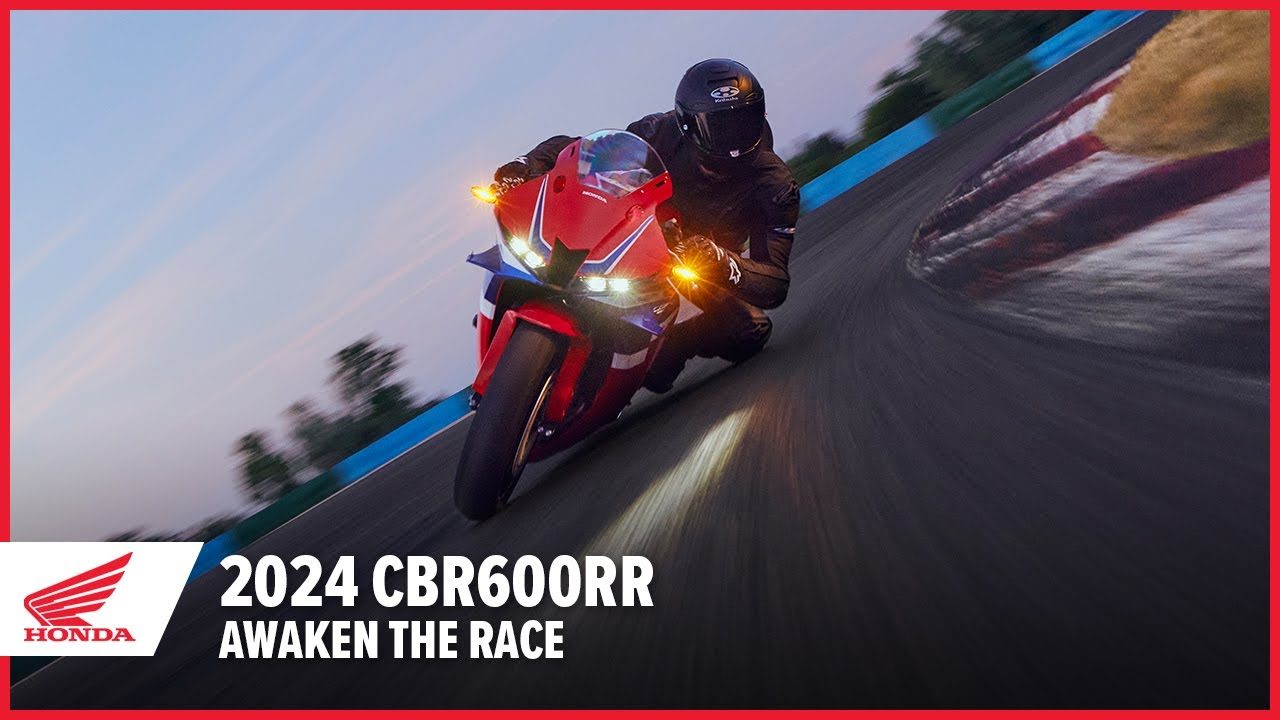
Meanwhile, the CBR600RR has a much more aggressive design, with a bone line that’s parallel to the ground suggesting a more aggressive riding stance. Additionally, for the 2024 model-year, the CBR600RR comes standard with winglets, a functional belly pan, and an upswept exhaust that sees the muffle mounted just beneath the tail.
Pricing and availability
When it comes to pricing, it’s also clear that the CBR650R is meant to be more accessible to a wider audience. It’s available in the US market with a base MSRP of $9,899 USD. Honda also recently announced an E-Clutch version of the CBR650R, although pricing in the US has not yet been confirmed at the time of writing. As for the CBR600RR, it’s quite a bit pricier carrying an MSRP starting at $12,199 USD. This price can go all the way up to $13,199 USD for optional ABS.
More For The Sporty Riders:
Sources: Honda CBR600RR, Honda CBR650R
RECOMMENDED FOR YOU
James May’s Honda Fireblade Is Up For Auction. And Captain Slow Clearly Has A Type
Two All-New KTM Sportbikes Are on the Way
Honda Just Knocked $500 Off Its Smallest ADV, But Is It Enough To Beat The Competition?
onX Wants To Make It Easier To Make Your Voice Heard On Public Land Issues
Are You Thinking Of 300 Swapping Your Honda Grom? Watch This First
This $1,000 'Doctor Doom' Bike Is Helping TVS Plot Motorcycle World Domination
Honda’s Oddball 750 Lineup Just Got New Colors In Europe