
How Black Bear Pursuit's Seth Watts Uses UTVs to Redefine Bear Hunting in California
Bears don't tend to hang out in easy-to-reach places. A Kawasaki Ridge makes getting to the trailhead easier.
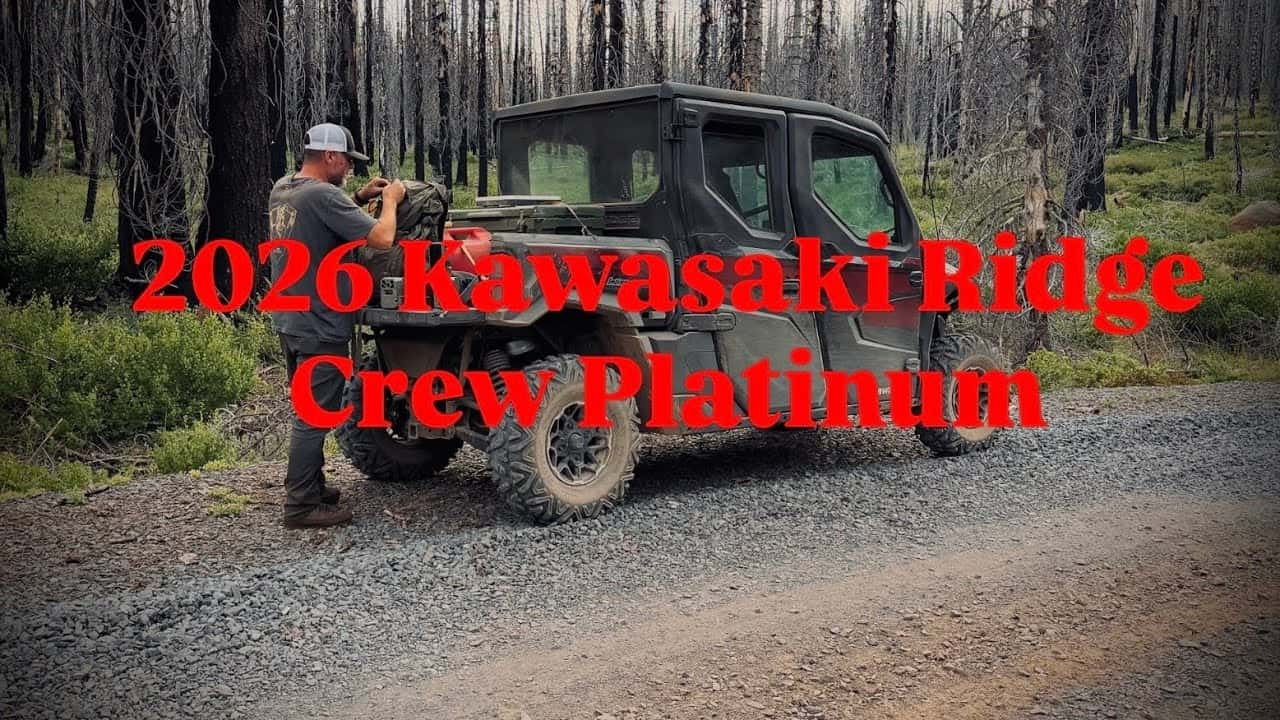

True wilderness black bears don't live in nice places. They live in dark hellholes, the sort of place that gives you nightmares, where the canyon walls are as steep as they come, rock slides are the norm, and where if you were out hunting and actually managed to harvest one, you'd be cursing the misfortune you've done to yourself. These aren't your Lake Tahoe garbage bears. They're wild, and they live in wild places.
And because of that, bear hunting isn't the normal Type 2 hunting fun. It's Type 22.
But while swearing, cuts, scrapes, bruises, and bruised egos go hand-in-hand with backcountry black bear hunting, that's also part of the allure when chasing them, and especially when you get to chase them in states like California, where the terrain is so widely diverse that you never know what you're going to encounter. Mountains, forests, cliffs, and rutted-out trails or washes are all on the table, and you'll quickly find that you're replacing your truck's suspension every year if you're going as deep as you need to go to find these elusive animals. And trails can only get you so far, which is where Kawasaki's Ridge UTV comes into play for bear hunter Seth Watts, who uses the machine to go deeper than just about everyone.
Watts has been hunting black bears in the state for almost a decade and has since filled a black bear tag each and every year since he started. The backcountry hunter started Black Bear Pursuit to document his adventures, as well as showcase the need to manage these awesome animals and dispel a lot of myths surrounding them—yes, you can eat black bear, and it's really tasty. In his pursuit, however, he's come to understand what a lot of hunters have, too: Modern UTVs are indispensable tools for hunters.
A sentiment the author can absolutely attest to.
Hunters Are Part of Conservation Efforts
RideApart: Talk to us about how you utilize your Kawasaki Ridge UTV.
Black Bear Pursuit: Well, I'm pretty new to the side-by-side thing. I've used them in the past just with friends that have had them. Typically, I just used my Toyota Tacoma. But this year, since I've had it, one thing I've realized is once you have one, you kind of just can't never have one again. As far as places you can go, the time that you're saving when you have one, as far as how fast you can move along, and the terrain that you can get through a lot quicker. They are time-saving, they're comfortable, and it's going to save me from having to rebuild the front end of my truck every other year.
RA: Agreed. So black bear management practices are pretty big issues with California. How have you dealt with that in your comings and goings, and has anything changed in those practices in the last handful of years?
BBP: So in recent years, or since I've been bear hunting, we've lost the ability to manage black bear populations in California with the method of using hounds. They lost that in 2013 through legislation. So it was voted that you could no longer pursue bears with hounds. And then since that happened, the black bear population exploded in California. I believe it was around 30-35,000 bears back then. And now the population is, they say, between 65,000 and 80,000.
RA: That's quite a fair amount.
BBP: To my knowledge, it's the highest in the lower 48. No other state has even close to what California has. I think the second most populated state has maybe half of what California has. I've never used hounds, but I do archery, and I do rifle. It's all spot-and-stalk or ambush style. Earlier this year, California approved a second bear tag for hunters, which was a step in the right direction.
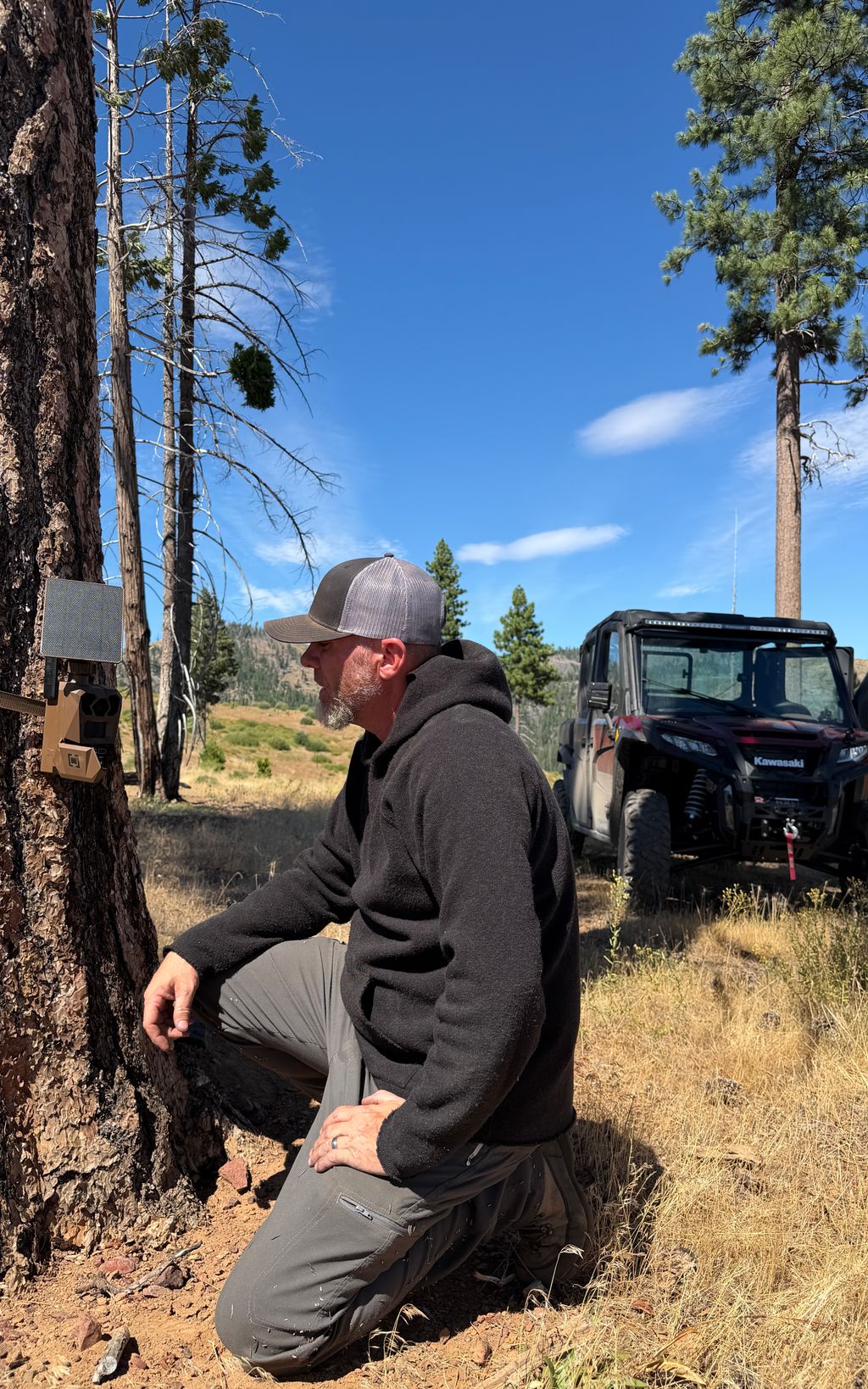
So I run a lot of cameras, and that's what I use my side-by-side for, to basically get as far as I can, setting up cameras, and getting to places that I need to be able to get to in a timely fashion.
RA: How has it changed anything else in your harvesting practices, your hunting? Has it made it easier? What have been some issues with it too?
BBP: Well, I haven't run into any issues yet.
RA: That's probably good.
BBP: I mean, things happen. So I would say that I hunt in some pretty remote areas. So getting access on roads that are typically not accessible with a truck, which I would do with my truck, but the Ridge just makes life easier. I've done it on motorcycles. I've done it on four-wheelers. I've done it in my truck. And pretty much how all of those compare to the side-by-side is your body is just not as beat up riding in a side-by-side.
The suspension in these rigs is far superior than what will be in a pickup truck or a quad, especially, or a dirt bike, which it just sucks the energy out of you riding a dirt bike or a quad. Whereas you jump in one of these and you got air conditioning, you got navigation, you got a heater. I mean, it's like driving a luxury truck really, but with far better suspension.
So most of my bears that I kill, they're pretty remote as well. So I'm cutting them up and packing them out in a backpack. So it's not like I can just take the side-by-side, drive up, toss it in the back, and head back to camp. But when you get back to the side-by-side, at least you're going to be comfortable getting back to where you're camping.
RA: It's "I'm going to go further and then I'm going to walk further."
BBP: I mean, not to say that you couldn't use it to road hunt, but that's not the style that I enjoy. Now, if I'm driving down the road and I see a bear that's going to give me an opportunity, I'm going to get out and take it. But most of the time, we're hiking down into a drainage that we know is going to hold bears, and we're either going to call them in with a predator call, especially during archery season, because that's when they're the most responsive to a predator call, like a fawn and a distress call. Or we're going to go sit in an area that we know they like to travel and that we've patterned them on camera, to where they either come through a certain area two to three, four times a week, and we're just kind of ambush hunting at that point.
RA: Looking at your site and through some of your photos, it definitely looks like you have been far more successful in bear hunting than I've seen anyone else be.
BBP: Well, bears for me are, I mean, it's just like anybody. Everybody has their favorite species to hunt, and bears have just, over the years, become my favorite to pursue. You've got to beat a bear's nose. You don't have to beat their eyesight. They live off their nose. So playing the wind and just studying the landscape of what the wind's going to do in the morning and the afternoon and how it changes and how you're going to bounce around playing that wind so that you can beat that bear's nose. It's not easy, but it's definitely doable.
RA: Talk to me about the harvesting of bear and that you can actually eat it and why you should and why hunters do eat bears.
BBP: Well, as a hunter, I personally don't kill anything that I don't eat. There's always been the myth of bear meat isn't good to eat. And I grew up hearing that from my grandpa. And lots of people say that bear meat tastes like trash. In my personal opinion, it couldn't be further from the truth. I personally would rather eat bear meat over deer. It's my personal favorite wild game. There are obviously things you have to be careful with on how you cook it because of the possibility that the bear could have trichinosis.
But there are things that you can do.
It's obviously a great meat to grind up and make sausage. You can also can it in a jar, and then it's shelf-stable. You season it, and it's like eating roast beef. The bear fat is another thing that when I harvest a bear that I will take as much fat as I can because you can render that down, and you can bake with it. It's actually really good for pastries or fry oil. I'll take the caul fat, which is the fat that wraps around the organs—it looks like a giant spiderweb—and wrap your meat in it, and then you cook it that way. And you can also take that fat and use it on your deer meat or whatever you want, really.
You actually yield more from a bear than you do a deer. As far as what you're taking, because you're not going to take deer fat. Deer fat isn't good to eat or use for anything, really. But as far as what you can take from a bear, you yield more from that than you do from any other species, in my opinion.
RA: What is something that you would want from a side-by-side that it maybe isn't offered yet or maybe you just haven't seen? Or that just would make life better in your pursuits?
BBP: Well, I think that one thing I've realized from being in multiple different machines, nobody makes a perfect machine. We all have our ideas. Everybody has something that they would like to see or wish it didn't have. And one thing that I have not seen in any of the side-by-sides is, I wish that the backseat in the Kawasaki Ridge Crew (4-door) would fold down.
In my Tacoma, it will fold down and then have just plastic on the back so you could load gear in there. So if you have two guys and you're going to go camp in a remote area, that backseat would lay down like a cargo shelf, and you could stack whatever you want in there as far as gear. I haven't seen that in any other side-by-side because you can stack it on the seat, obviously, but as you're down some of these really rough roads, stuff slides off the seat; stuff's shuffling around. But if they had the back seat that lays down in a Toyota Tacoma or some of the other pickup trucks that do that, I think that would be a really cool feature.
(Editor's Note: The rear seat in the Polaris Xpedition folds down.)
I do wish they had door locks to secure stuff, too. When I'm out hiking or retrieving an animal and I don't want to take my rifle or my bow or my vinyl harness because I'm just going to be packing out an animal, I want to be able to secure my valuables.
But like I said, there's no perfect machine. And I know that Kawasaki's late to the game getting into this, so I think they're going to learn real quick. I think Kawasaki's the type of company that likes to listen to its customer base. Other than that, those two things, that Ridge Crew, there's really nothing else. But it's really probably, out of all the machines I've been in, the closest to perfect out of all of them.
RA: I mean, you're going into nasty, deep country. If you're saying that it's pretty perfect, then it's a good seal of approval right there. Bears don't live in nice places usually.
BBP: And they never die in a nice place.
RA: I don't think anyone dies in a nice place based on my experience.
BBP: Well, usually a mature buck and a big bear, they're not going to live somewhere nice. They're smart. They're going to stay away from people as much as possible. So, getting to those areas, like some of the roads that I take, there are people that try to get up there in their truck. Every year I'll find a truck up there that somebody's left. They're never there because they're out getting parts. I've seen them with blown-up rear ends, twisted drive lines, the wheel fell off, crazy stuff, to the point where you're like, "What are you doing up here in that truck?"
But those are the kind of things that I'm looking forward to avoiding with the side-by-side. I can take my truck in so far with the trailer, dump it, and get on the side-by-side. And I know at least I have a truck that I'm going to be able to get home with. Why take my truck and beat it to death all year long scouting, then take it into where I'm going to hunt, beat it to death there, and then maybe not even be able to get home?

RECOMMENDED FOR YOU

Kawasaki Versys 900 Spied Testing in the Wild. New Team Green Bike Incoming
It Took Norton 100 Prototypes To Get Its New Manx R Superbike Right
We Just Found Kawasaki's Robot Horse Patent Drawings. They're Full Of Insane Details
India’s EV Motorcycle Startup Is Already Selling More Bikes Than Harley-Davidson's LiveWire
Kawasaki Unveils 2-Seater Teryx H2 UTV. It's Still Supercharged Insanity
Royal Enfield Wants To Prove You Don’t Need A Giant Bike To Tour America
Kawasaki Hid A Naked Superbike Under Its Best Retro Paint Yet