
Aprilia's Wildest RSV4 Ditches Electronic Suspension On Purpose
Aprilia built a 220-horsepower superbike with MotoGP aerodynamics, then decided a wrench was better than another computer.

Modern superbikes have become rolling supercomputers with handlebars. They have traction control that knows how far you’re leaning, wheelie control that saves you from your own stupidity, and suspension systems that constantly adjust themselves while you’re riding. It’s all very clever, especially when you consider that most of us are just trying to survive a track day without embarrassing ourselves in front of the guy on a 20-year-old Suzuki.
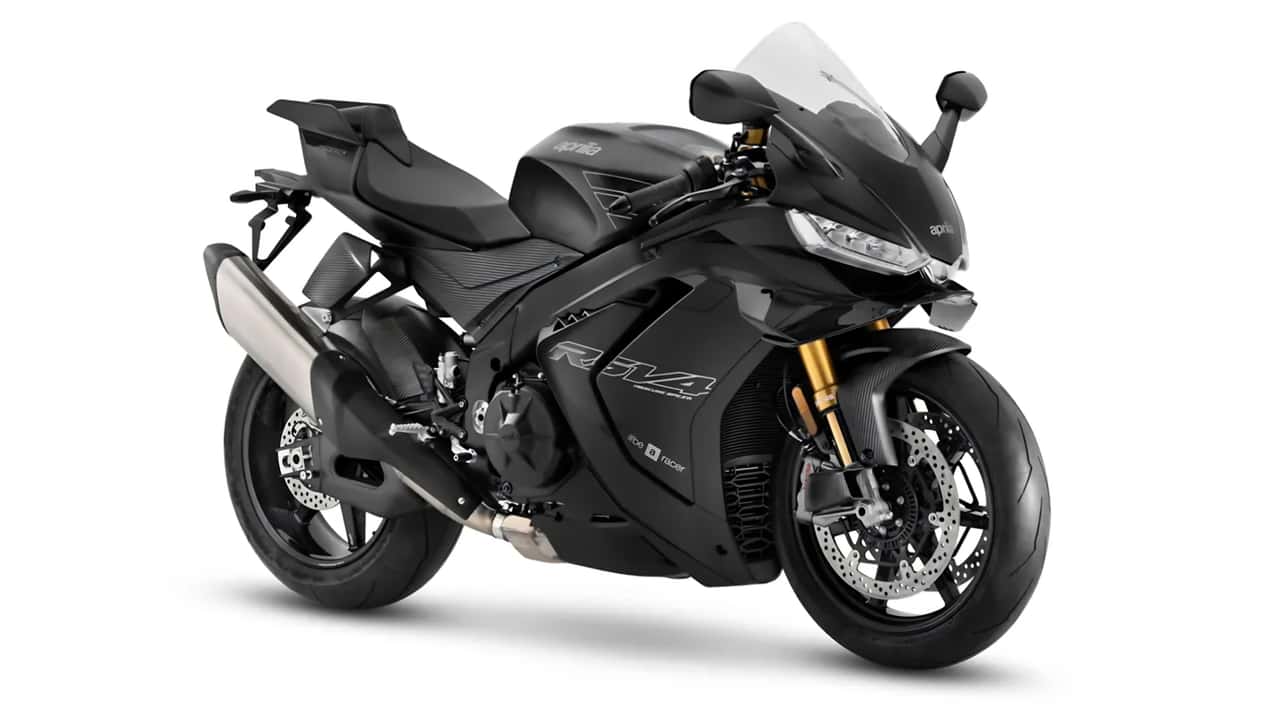
But Aprilia apparently thinks there’s a limit to how much electronic intervention a serious superbike needs. Its new RSV4 Obscure Spe.Ed. is a 220-horsepower, carbon-fiber-covered monster with enough MotoGP-derived aerodynamic hardware to make an aerospace engineer blush. And despite all that technology, Aprilia has ditched the electronically controlled suspension of the regular RSV4 Factory in favor of something decidedly more old-school.
Instead of the Factory’s semi-active Öhlins setup, the Obscure Spe.Ed. gets manually adjustable Öhlins NIX forks and a TTX rear shock. These aren’t bargain-bin components Aprilia found while cleaning out its parts warehouse. They’re premium, track-focused suspension units that put the responsibility for dialing in the bike squarely on the rider and whoever happens to know their way around suspension tuning.
And there’s a pretty compelling reason for that.
Gallery: Aprilia RSV4 Obscure Spe.Ed.

More From Aprilia
Semi-active suspension is fantastic on the street, where pavement quality changes constantly and the bike needs to adapt to whatever nonsense the road throws at it. But on a racetrack, where corners, braking zones, and surface conditions are relatively predictable, experienced riders sometimes prefer a fixed setup they can fine-tune and reproduce consistently.
That doesn’t mean electronic suspension is inherently worse on track. It’s just solving a slightly different problem. When you’re chasing tenths of a second, having precise control over compression, rebound, and preload can matter more than having a computer make adjustments on the fly. Of course, this also assumes you know what you’re doing, because a screwdriver in the wrong hands can turn an expensive superbike into an even more expensive shopping cart.
The suspension might be refreshingly analog, but don’t mistake the Obscure Spe.Ed. for some stripped-down purist special. Its 1,099cc V4 pumps out a claimed 220 horsepower, while carbon-fiber bodywork, lightweight wheels, and MotoGP-inspired aerodynamics help turn that power into something vaguely manageable. Aprilia has even developed aerodynamic appendages around the rider’s legs, because apparently the motorcycle itself wasn’t producing enough downforce.
There’s also an extensive electronics package, including sophisticated traction control, wheelie control, engine braking adjustments, and GPS-based track functionality. In other words, Aprilia hasn’t declared war on computers. It’s simply being selective about where they belong, which is a surprisingly sensible approach for a motorcycle that otherwise seems determined to turn every track day into a qualifying session.
And that’s what makes this particular RSV4 interesting. It’s not trying to prove that old technology is better than new technology. It’s showing that more automation doesn’t automatically equal better performance, especially when the intended customer knows exactly how they want their motorcycle to behave. Whether those customers can actually extract everything this machine has to offer is another matter entirely.
But at least they’ll have something to fiddle with between sessions.

Source: Aprilia
RECOMMENDED FOR YOU
Limited Edition Aprilia RS 660 Graphic Says How We're All Feeling About Phillip Island
Please Stop Putting Giant Tablets On Motorcycle Dashboards
Secret MotoGP Riders’ Meeting To Vote on Cancelling Qatar GP. Rumors of Riders Union
Continental's New Adventure Tire Is For Riders Who Know They'll Probably Never Go Off-Road
You Can Buy James May's Awesome Honda Superbike
Royal Enfield Uses Jumbo Embiggening Ray On The Continental GT, Turns It Into A Shiny New 750
If You Love Yamaha's 70th Anniversary Livery, You Can Get It On Its Tiny Sportbikes Now