
Canada Is Having Some Of The Same Problems With E-Bikes And Motos As The US
An undercover investigation by a Canadian Broadcasting Company program called 'Marketplace' shows a familiar struggle. Can it be fixed?
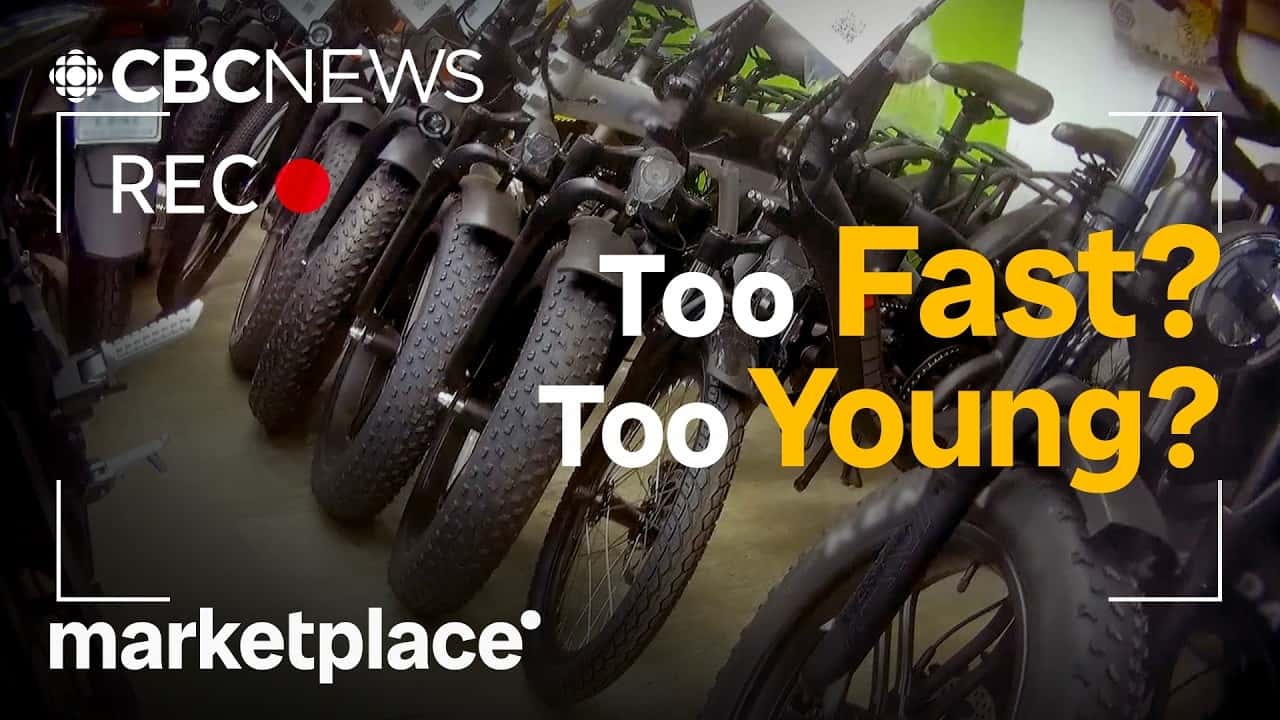

Canada, it seems, is having some of the same problems that we here in the US are having with regard to what the best way to handle e-bikes and e-scooters and kids riding both types of vehicles is. Are our neighbors to the north any closer to good solutions?
It doesn't seem like it if you watch this new program from the Canadian Broadcasting Corporation (CBC). In an episode of the series Marketplace, presenters of the show went undercover to both big-box and smaller e-mobility stores to see whether the salespeople would recommend e-scooters or e-bikes for kids who are considered underage for those vehicles in whichever province they were shopping. For those in the US unfamiliar with Canadian geography, our neighbors to the North have provinces (and provincial laws) much like the US has states and state laws.
The program spends time speaking with a couple of families where children (one a teenager, another a four-year-old) suffered serious injuries related to these vehicles. Both had skull fractures and required intensive medical treatment; one was a teenager who was riding an e-scooter and crashed, while the other was a four-year-old who was hit-and-run on a sidewalk in front of his daycare by someone riding an e-bike who has still never been found, even though it's a year after the crash.
While I'm reasonably confident that we can all agree that it's horrible these kids got hurt, and that something needs to be done, there are so many factors to consider that it's an extremely difficult knot to untangle.
And the biggest problem is, there is no one simple solution to any of this. Instead, it's going to take a collective effort from multiple angles to come up with a reasonable solution to this issue.
We Can Do Better Than This
Legislation Alone Isn't Enough
While thoughtful, effective legislation can and should be a part of the solution, simply telling companies that they have to adhere to certain rules regarding maximum speed and power of their e-mobility devices, or telling kids and their parents that only kids ages X and above can legally ride, will not magically solve the problem.
That's when some folks might ask, what about enforcement of either existing or new legislation? A system of punitive fines for companies (whether it's manufacturers, distributors, or shops) that sell e-mobility devices they shouldn't, or to people they shouldn't, only works if it's significant enough to cause pain. And also, such a system only works if it's publicized well enough that everyone in a given area knows that it's a potential outcome, and also only if it's fairly enforced. All of that is tough to hash out, and it's only a single piece of the puzzle.
There's also been some talk of holding parents or guardians responsible if their children hurt or kill someone else while riding e-mobility. And there's currently a pretty awful case where the mother of a 14-year-old who allegedly hit and killed an 81-year-old man while doing wheelies on a SurRon Ultra Bee and then fled the scene that's playing out in California.
Debates about parental responsibility for their children's behavior in a legal context have been ongoing since the late 1800s, and are one more piece of the puzzle that we're probably going to have to contend with if we want to figure this out. But since this discussion has been going on for longer than any of us (either writing or reading) have been alive, I also have my doubts as to whether we'll effectively sort it out any time soon. Still, you do have to try!
Clear, Accurate Designations Of Vehicle Types Would Help
While this CBC piece had more to say about e-scooters than e-bikes, a recent effort in Los Angeles comes closer to a thing that I believe is a bigger problem: Lumping certain lightweight e-motorcycles in with e-bikes. I've definitely seen kids riding SurRons and Talarias around where I live, and it's not difficult to understand why these EV dirt bikes are so easy to slip through the cracks to people who don't know any better.
Combustion dirt bikes are obvious, and in a lot of areas, there are existing laws against riding them on the street, or even on certain trails. They're easy to identify for just about anyone, and so it's a bit easier to say "dirt bikes are only allowed here" and readily clock them if they're not riding where they're supposed to be.
But the thing about a Class 1, 2, or 3 e-bike and an EV dirt bike is, unless you're familiar with these machines and you know what you're looking at, it's more difficult to distinguish them. This is where legislation (with teeth) at the manufacturer and distributor level could be useful. The Class 1/2/3 designations are already somewhat useful, but there needs to be an additional, non-nebulous designation for EV dirt bikes that doesn't simply leave them unaccounted for.
Yes, parents and adults in the lives of these kids need to bear some responsibility as well. But as things currently stand, it's not difficult to wrap your head around how an otherwise well-meaning adult could try to buy a gift for a grandkid or nephew or niece and not fully understand which type of e-mobility thing they're buying.
Especially if they're buying it online and are in a hurry. Do I wish that everyone would always do adequate research to understand the thing that they're buying before they buy it? Sure, but unfortunately that's not the world we live in, and much as I might dislike it, I have to work with reality.
Yes, I know you can't legislate inattention or inability/unwillingness to understand the rules away, but assigning clear categorization and rules/expectations for each category could go a long way toward solving this angle of the problem.
Better Public Education Is A Must
Now, I know that I'm a weirdo for multiple reasons, and one of them is that I don't automatically assume I know everything about anything. I know and accept that I don't, and I try my best to keep learning as I go. Obviously, like any human, I have my own opinions and biases, but I try to keep an open mind and absorb new, credible information when I find it.
We're going to need a lot better public education about what is and isn't an e-bike, what is and isn't an EV dirt bike, and so on. Even so, just like every other type of education, some people will absorb more and do more with that information than others. Also, different people have different learning styles, so that's something to consider as well.
But just like we had all those PSAs, billboards, TV ads, and even comics about how to separate your recyclables and keep reusable cardboard, metal food cans, and plastic bottles out of landfills, I feel like it's possible to apply a multi-pronged approach to get the word out. Things like podcasts, YouTube, social media, online advertising, well-designed informational websites, and more can come into play here. School and local library programs could also help get the word out to as many people in your local community as possible.
Again, no single avenue alone is going to communicate with everyone, but if each avenue reaches a few more people, pretty soon you have a whole bunch of people. And they can tell their friends and families, and they can tell their friends and families, and so on. Word of mouth also matters, as long as the information shared is reasonably accurate.
What's At Stake
People are getting hurt. Angry pensioners with too much time on their hands are yelling (sometimes with good reason; sometimes not). Responsible e-bike users are facing the brunt of hastily (and sometimes poorly) thought-out legislation that doesn't address the actual problems, only makes them more opaque. Ineffective wording, half-baked attempts at community education, and more are sowing mistrust, confusion, and frustration among local communities all over the place.
I know this because I've seen it, and it's frustrating because I know we can do better. Ultimately, I think most people want kids to be safe, have fun, and get outside (and away from their screens). Adults who use e-mobility also want to get outside and have fun, for the most part. Some might be using e-bikes for exercise, or work, or just as a great way to get around without having to worry about increasingly high fuel prices.
I've said this before, but companies exist to make money. That is not a value judgment; that is a fact. That's why standards and safety certifications and carefully crafted legislation (that is also properly enforced) are crucial parts of any viable solution.
At the same time, so is clear-eyed education. We have collectively and societally decided on the proper steps to get responsible teenagers and adults driving cars (and operating motorcycles) in the past. Surely, we can figure this puzzle out, too.

RECOMMENDED FOR YOU

Would You Give This 'Unique' EV Scooter A Go?
This Electric Motorcycle Was Almost Vaporware. Now It Wants To Conquer America
Upcoming Movie 'Bikers Vs. Werewolves' Looks Like Campy Horror Hysterics
Not Everyone's Happy About King of the Hammers' New Proposed OHV Trail
I Wanted To Love EV Motorcycles. We Need Better Infrastructure
This Giant Scooter Proves Why You Shouldn't Give Up On Your Projects
Honda's New CBR500R Four Might Have China To Thank For Its Existence