
MotoGP Bans Holeshot Devices Starting Today. Comes After Accidents and Ignored Warnings
Riders have been saying this for a long time.
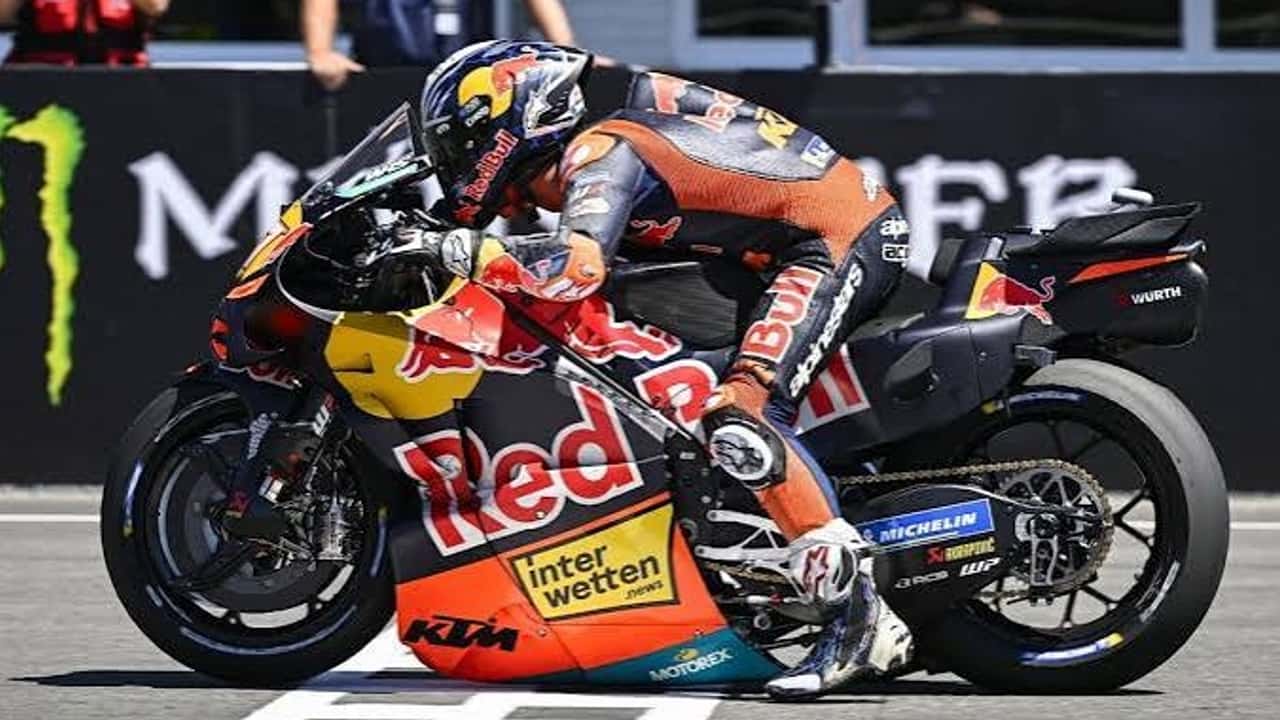

Starting this weekend, some fairly big changes are coming to MotoGP, but it took a fairly serious racing incident to bring them about. Starting from the Dutch GP, holeshot devices will be banned. If only someone could've told MotoGP's safety commission that this would've been a good thing to do a long time ago, before the crash. Oh, wait, someone did.
Jack Miller has spoken out several times about the dangers of holeshot devices, going as far as suggesting they be banned. The holeshot devices were set to become illegal in 2027, but Miller suggested several times that they should be banned before that or, at a minimum, just banned at tracks where riders need to brake abnormally to disengage the devices for the first corner.
After Jorge Martin's first-corner crash at Balaton Park Circuit, involving five riders, Miller said, “At the end of the day, we’re making an unnatural manoeuvre, especially here in Balaton where turn one was quite slippery with the new asphalt, that you weren’t even really able, without locking the front, to really get enough transfer to unlock the devices.”
All Things MotoGP
After a serious turn 1 crash at the 2026 Catalan GP, Miller said, “I've been saying all along, since Barcelona, since we saw two crashes at the first corner, the same sort of thing: take them [start devices] off, everybody's at the same level." But Miller is just one of many high-profile riders to speak out against the devices and highlight the dangers they present.
Now, the Grand Prix Commission has made the decision to ban holeshot devices for the rest of the year. According to a MotoGP release, "The devices will not be allowed under the sweeping regulation changes next season anyway, but the ban moves their removal forward to the 2026 Dutch GP, which is this weekend. It’s been a hot topic during a few Grands Prix this season and now it’s official."
So MotoGP has gone from not banning holeshot devices on certain tracks that pose a clear danger to imposing a blanket ban on all tracks—a complete 180. But that's not where the new regulations end, because the distance between riders will also change.
The distance from rider to rider will change from three meters to four meters. That means that the distance between each row will also change, from nine meters (3 x 3) to 12 meters, which is 3 x 4 meters. The commission hopes that the new spacing will also play a part in reducing the risk of an incident involving multiple riders in turn 1. The new grid spacing will come into effect by next month's GP in Germany.

RECOMMENDED FOR YOU

Sidecar Racing May Return To The Isle Of Man TT Next Year After Two Horrific Accidents
Building A Go-Kart Out Of Dirt Bikes. What Could Possibly Go Wrong?
Guy Martin Never Won The Isle Of Man TT, But You Can Buy The Bike That Got Him Closest
Royal Enfield Is Flying Higher Than Ever, But It Better Remember What Happened To Icarus
China's CFMoto Wants Into MotoGP. Might Actually Make It Happen
Indian Motorcycle Has No Idea What It's Doing, And Its New Bike Proves It
Want A New Beta Dirt Bike? Why Not Go Racing And Save A Bunch Of Money?