
Indian Motorcycle Has No Idea What It's Doing, And Its New Bike Proves It
Who's this bike for?

Indian Motorcycle feels a lot like Schrödinger's Cat: Is the company alive or is it dead once again? And that's in large part due to its rather eventful past 12 months.
America's "first" motorcycle company went through yet another sale, one that caught the entire industry off guard, going from Polaris ownership—the folks who brought Indian back from the dead—to private equity. And I say off guard, because the sale came on the heels of a rather quiet period of Indian's tumultuous history of ownership, one where you had long stretches of the brand gathering dust in the years when it ceased to exist outside a few diehard acolytes' bikes, metal signs, and bedroom posters.
Issuances that this wouldn't be a traditional private equity smash-and-grab followed, with new CEO and former Harley-Davidson executive Mike Kennedy telling everyone that the company was on firmer ground than before. But I got the sense that the business wasn't on the best of paths forward when I talked to Kennedy for the first time.
See, there are two incredibly hot markets in the motorcycling world at present: EV dirt bikes and entry-level motorcycles. These two represent the fastest-growing lineups, as they're favored not only by the youth—the folks who'll keep brands alive going into the future—but also by much of the populace dealing with our present economic outlooks, i.e., bad economic outlooks. But when I pressed Kennedy on whether Indian Motorcycle was possibly looking into an entry-level bike, he unequivocally stated that the company was not.
"We're not going to be that entry-level motorcycle," said Kennedy, further stating that an entry-level motorcycle would be a "distraction for this company." He added, "I think we're an aspirational brand. And one of the things that the Carolwood team is really excited about is on the apparel and licensing front. What things can we do to keep the brand aspirational to a wider audience so that as people come in, maybe on other brands or other pre-owned brands, and they're looking at the Indian product line as an aspirational brand."
Aspirational brands are for those on solid financial footing. Indian ain't that, which is why it killed the FTR1200, along with 11 trim levels in its Scout lineup, and why the company was sold off, only for Polaris' economic outlooks to be bettered. The company also said it was going to focus heavily on merch, too...
Then came a political attack-ad advertising campaign going after Harley-Davidson, Indian's main competitor. Spears were lobbed at the Motor Co. by Indian, which Harley took on the cheek—repeatedly—choosing the high road in this instance. It worked, too, as the motorcycling industry decried Indian's campaign and called the company out on it. Since then, the brand went dark, choosing not to answer any of our questions about the campaign, the campaign's motives, or who put it together, and releasing nothing in terms of new product launches apart from some small-time collabs that barely constituted more than a blip.
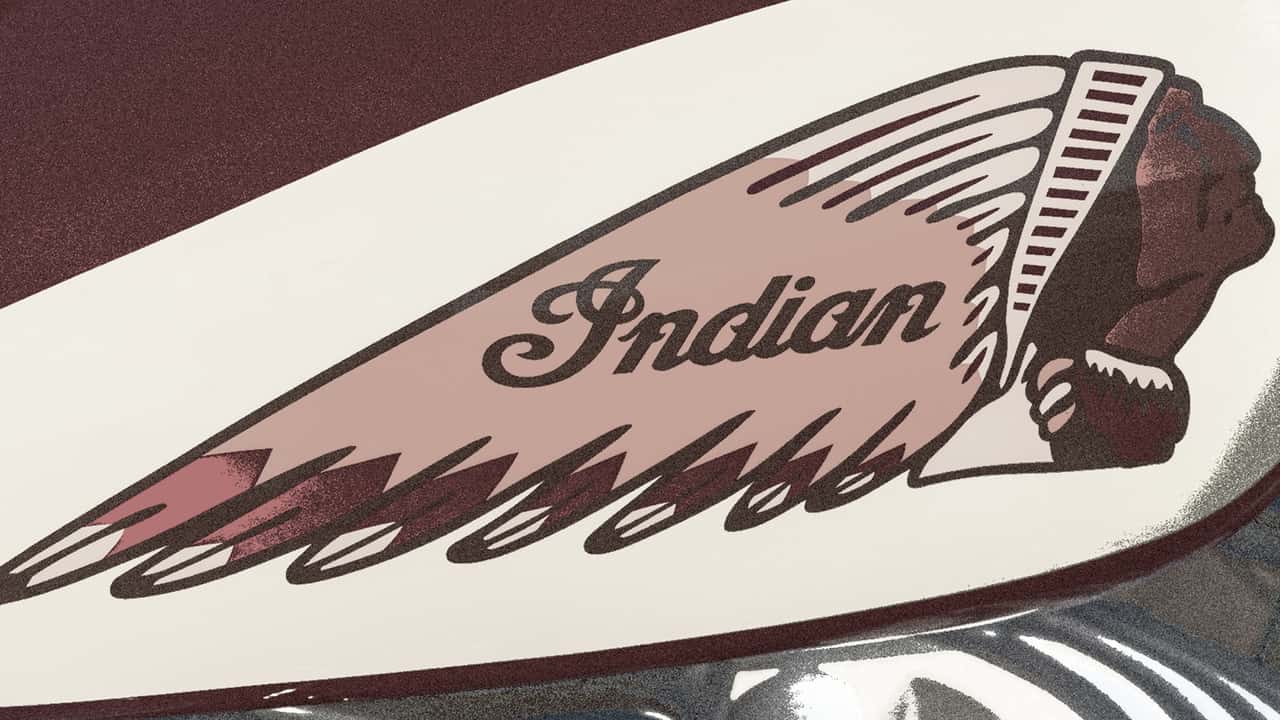
Last week, the silence changed with the debut of the Indian Chief Vintage Sturgis, SD Edition motorcycle. What is it? Well, it's a "limited-edition" Indian Chief Vintage with a $4,000 paint job and nothing else. And it represents exactly why I've felt apprehensive about this "new" private-equity-owned Indian Motorcycle. Because who is this motorcycle for?

Indian Chief Vintage Sturgis, SD Edition
Businessy Business
I want to mash up two important concepts to explain my issue with Indian: that of the original "Join, or die" campaign put together by Benjamin Franklin during the American Revolution, and Charles Darwin's theory of evolution, in that you either adapt or die. The concepts are eerily similar, as you either get with the times and adapt, or you face your own extinction. Indian isn't adapting, nor is it joining those who are. Instead, it's doubling and tripling down on lineups that no longer speak to the company's target demographic, nor speak to any other demographic around.
The Greatest Generation that made Harley and Indian household names no longer ride motorcycles or are already dead. And Boomers, the folks who benefited from hearing about these bikes from movies and from their parents, already have their bikes and are getting to the point of not riding anymore either. It's why cruiser sales across the industry have tanked, despite these bikes getting better and better. Harley sold just 132,535 new motorcycles last year.
Indian sold just 24,421.
Both represent sharp declines, too, a reality that has been present for three decades, and readily apparent to anyone looking at yearly sales data. To its credit, and really new CEO Artie Starrs' credit, Harley-Davidson seems to finally see what every analyst has seen for a long time and aiming to correct it by both bringing in a new entry-level motorcycle, widening its lineup to include new offerings the public actually wants, righting its EV strategy with an upcoming EV dirt bike, and getting back to its roots. Indian, on the other hand, is barreling toward another prolonged period of lying on a cooling board.
Emphasis on cruisers. Emphasis on its Greatest Generation and Boomer past. No entry-level motorcycles. Relying on merch sales. Getting into pissing matches with Harley-Davidson, a company that's nearly seven times Indian's size. And emphasis on a demographic that isn't going to keep the company alive for another 125 years, a history that Indian loves to remind folks of but fails to mention the prolonged periods of not actually existing in the middle of that lineage. And the Indian Chief Vintage Sturgis, SD Edition is a perfect encapsulation of this mentality.
The Chief Vintage is already a bike that trades in faux nostalgia to a party of almost no one. A vintage-looking paint job and some commemorative decals and serial numbers only reduce that possible customer pool further. Kennedy, for his part, doesn't apparently see it that way. In that first chat, the new CEO told me, "I think most importantly from a business management perspective and from a growing rider perspective, there is significant market share in middle and heavyweight cruisers, baggers, and touring. So we can continue to grow, and we can continue to grow our share [of those markets]." Those markets, however, aren't growing.
To me, the Chief Vintage Sturgis, SD Edition and its introduction and conceit are the woolly mammoth or those who sided with the British crown. Dead ends. Emphasis on dead.

RECOMMENDED FOR YOU
Indian Motorcycles Will Kill A Host of Its Confusing Scout Lineup
Building A Go-Kart Out Of Dirt Bikes. What Could Possibly Go Wrong?
Royal Enfield Is Flying Higher Than Ever, But It Better Remember What Happened To Icarus
Droughts Are Now Showing Lost Treasures, Including a Snowmobile and ATV
This $1,000 'Doctor Doom' Bike Is Helping TVS Plot Motorcycle World Domination
Buell Might Turn Its Insane V-Twin Hill Climb Motorcycle Into a Production Adventure Bike
The Consumer Product Safety Commission Shouldn't Need Our Personal Information. Especially Not Our Health Records.