
Side-by-Side Maker Polaris Just Reinvented the CVT, and It Can Change Gear Ratios
CVTs have been largely adopted by the side-by-side world as they're perfect for most every type of off-roading. But a CVT that can change gear ratios on the fly would be amazing, which is what Polaris just invented.
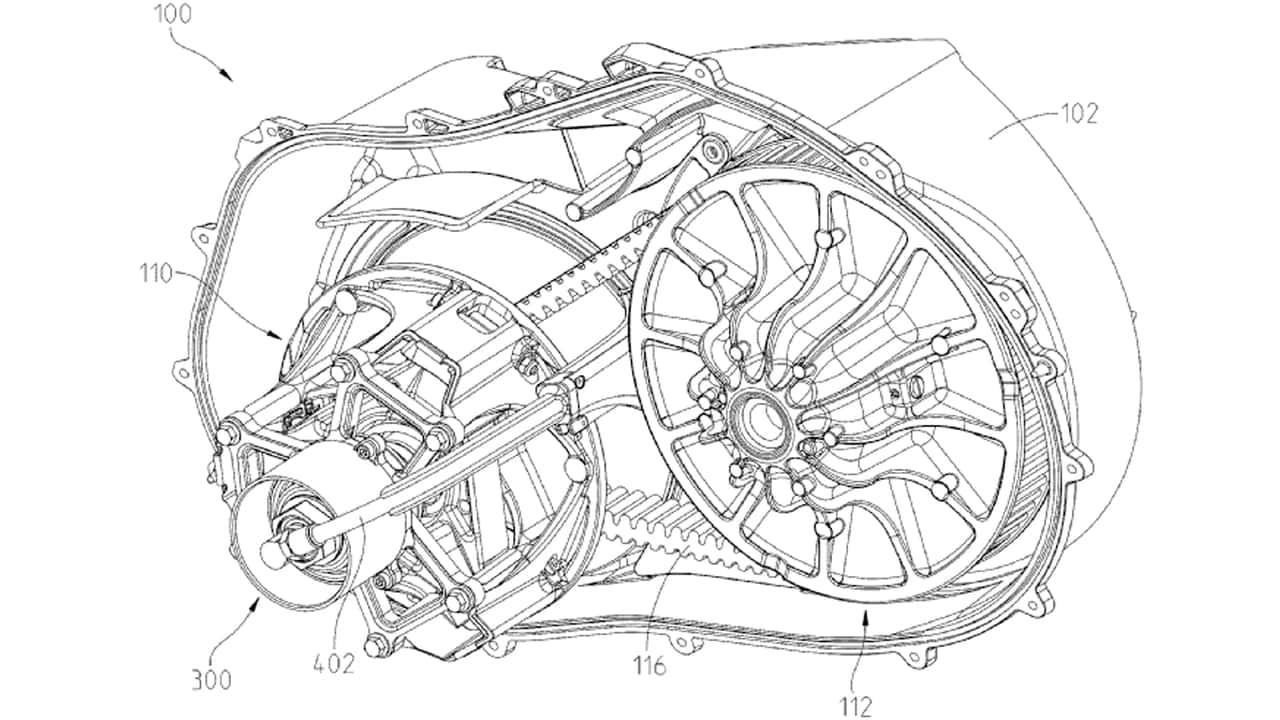

One of the most widely used transmissions in all presently manufactured vehicles is the continuously variable transmission or CVT. The banned Formula 1 technology was originally made popular among economy cars, but quickly grew into the transmission of choice for just about every new gasoline-powered vehicle, including side-by-sides.
UTVs have long-used CVTs in everything from utility-focused side-by-sides to the go-fast models like the Can-Am Maverick X3, Polaris RZR, and even the 250-horsepower supercharged Kawasaki Teryx H2 that recently debuted. And only recently have we begun seeing those faster models adopt Porsche-like dual-clutch transmissions for even faster shifts.
However, while the CVT allows users to maintain RPMs throughout the transmission's gearing, once you set the gear ratios at the factory, and really from when the machine was first engineered, you're stuck with those ratios unless you do some heavy modifications. That means that your utility side-by-side or go-fast, take-names machine isn't the all-rounder it's intended to be, i.e. perfect for all things all the time.
Well, as Polaris is wont to do, the team from Minnesota might've just changed the game again and reinvented the CVT with its latest patent that allows it to change gear ratios on the fly.


According to the patent discovered by RideApart, Polaris states "Continuously variable transmissions (“CVT”) are used in many vehicles. Mechanical CVTs are easier and cheaper to manufacture than alternative CVTs such as hydraulic and electronic CVTs. Rubber belt CVTs are also cheaper to manufacture than steel belt CVTs." Hence why the company, along with just about every other car manufacturer in the world, uses them.
But here's where it gets juicy.
"However, one disadvantage of traditional, mechanical, rubber-belt CVTs is that once the CVT is installed, the CVT is tuned to specific settings and cannot be modified during vehicle operation." As such, the patent that Polaris has cooked up "relates generally to apparatuses, systems, and methods for modifying gear ratios in continuously variable transmissions. More specifically, the disclosure relates to apparatuses, systems, and methods for providing inputs for modifying the position of a moveable sheave of mechanical continuously variable transmissions."
What that means is that through some form of mechanical, electrical, or pneumatic mechanism, Polaris can move something within the CVT itself and change the transmission's gear ratios, either up or down, depending on the operation or need. In practice, that means you could with the push of a button gear down for low-speed crawling or gear up for high-speed shenanigans. It's a fascinating patent, one that is over my engineering head.
I do, however, see that the patent drawings are based around a Polaris RZR, though the brand loves to use that model as the basis for everything, so there's no guarantee it'll debut on that. However, there's a good chance it will, as this would make the RZR the ultimate swiss-army knife of backcountry trails and rocks.
You Get a Patent!
RECOMMENDED FOR YOU
Driving The 2026 Polaris Xpedition Is Good. But I Wanted It To Be More For The Price
Lidl Is Selling a Ridiculously Affordable Motorcycle Paddock Stand. But There’s a Catch
There's An AI-Powered, Autonomous Polaris Ranger On the Front Lines In Ukraine
This Isn't A Super Cub. But What If It Took Over The World In An Alternate Universe?
Polaris Gave Another $200,000 to Safeguard OHV Access. And Partnered With the National Forest Foundation
The Used Market Is Thriving Because People Can't Afford New Motorcycles
Polaris Wants Your Helmet To Know When You Need to Stop Riding. Patents Fatigue Monitor