
BMW Patent Application Shows It's Still Working On Electric Boxer Design
Here's how the configuration shown in the Vision DC Roadster Concept would work.


When you think about BMW Motorrad, what comes to mind? The first two things most people will say are the GS series bikes and Boxer engines—and the order in which they’ll say those two things is debatable. After all, BMW has been putting its signature boxer engines in bikes for generations, well before the first GS ever left the factory.
June, 2019 may seem like an entire world away from June, 2022—but it’s when BMW first pulled the wraps off its Vision DC Roadster electric motorcycle concept. There was a lot to consider in its design—but the extremely cheeky (inasmuch as anything from BMW can be considered “cheeky”) centerpiece was clearly its Boxer-esque configuration of certain powertrain elements.
On June 2, 2022, the U.S. Patent and Trademark Office first published BMW’s patent application for its electric boxer design. However, as is often the case with OEMs that sell bikes around the world, this isn’t BMW’s first such application for this design. That, in fact, came back in June, 2019—with, very unsurprisingly, the German patent office. (Incidentally, in case you ever wondered, the German compound word for “electric motorcycle” is apparently “Elektromotorrad,” and we totally love it.)
Gallery: BMW Electric Boxer Patent Drawings

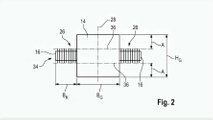

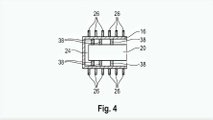
There are at least two big ways in which it’s a brilliant idea. If you’re BMW, and you’ve been configuring engines the way you have since the first half of the 20th century, there is the visual branding to consider. More than that, though, it’s eminently practical as far as cooling is concerned. Electric vehicles have very real cooling concerns—and batteries can and do get very hot, both while they’re in use and while they’re charging. If you use fast chargers (and we’d be surprised if a BMW motorcycle didn’t involve fast charging going forward), they tend to get even hotter. Thus, appropriate thermal regulation is an urgent and key part of EV design.
BMW’s patent proposal suggests multiple possible configurations in order to achieve optimal cooling in its electric motorcycle applications. All rely on external cooling fins, which take advantage of the movement of air over their surface area to help cool whatever is housed within. That could be an electric motor, a battery, a controller—or even an additional liquid cooling element. In the latter case, think of it as a secondary means of cooling.
Alternatively, BMW suggests, certain parts of the electric drivetrain could be housed in the boxer portion, taking advantage of mechanical cooling from the lightweight aluminum housing—and then other, more remotely-located drivetrain elements could use a separate liquid-cooling element. The inventors’ point in this application is that, by incorporating both types of cooling into an electric motorcycle design, it could theoretically lower weight, centralize mass, and also have the most efficient cooling possible to optimize a potential electric motorcycle drivetrain.
Now, that doesn’t mean the Vision DC Roadster Concept is any closer to becoming reality—but it’s interesting to get a peek behind the curtain at what it’s thinking. Also, seeing that it’s a design throughline that stretches back to at least 2019 and continues into 2022 via patents in multiple countries is also fascinating.
Electrification Is A Journey:
Sources: Free Patents Online, WIPO
RECOMMENDED FOR YOU
BMW Is Making an M 1000 RS That Aims To Be the Most Powerful Sport-Tourer on the Market
Yamaha's TMAX Scooter Gets A Mansory 'Luxury' Makeover, And Winglets For Days
BMW’s Upcoming R20 Spied. The 2-Liter Monster Went From Concept to Near-Production-Ready
Mining Claims Have Already Been Filed For Two Monuments Drastically Reduced By Trump Administration
BMW Layoffs Are Coming. Though Unclear If It Will Affect Motorrad
Cars And Trucks Still Kill E-Bike Riders The Most, Says The Actual Data
BMW's Motorcycle Division Profits Are Up While Its Automotive Side Readjusts