
Sena's New Active Noise Cancelling Helmet Thinks It Can Replace Your Earplugs Forever
Sena’s Phantom ANC uses headphone-style noise cancelling tech, but don’t expect airplane-level silence or to ditch earplugs just yet.

Wind noise is that one riding buddy nobody invited, but always shows up anyway. It never pays for fuel, never shuts up, and somehow manages to ruin perfectly good highway stretches with its constant whooshing tantrum. You don’t notice it at first, but a few hours in, you’re mentally toast and wondering why your brain feels like it’s been pressure-washed.
That’s why earplugs have become standard kit for a lot of riders. They work, but they’re not perfect either.
Now that it's 2026 and technology continues to advance at a breakneck pace, intercom specialist turned smart helmet manufacturer Sena thinks it might have the ultimate solution. If you’ve been riding for a while, you probably know Sena as a comms brand first. Bluetooth headsets, rider-to-rider intercoms, Mesh networking. That’s their bread and butter. They’ve been in that game for years and built a solid reputation doing it. Helmets came later, mostly as “smart helmets” with their electronics baked in from the factory. Models like the Momentum were basically Sena saying, “What if the helmet and comms system were designed together?”


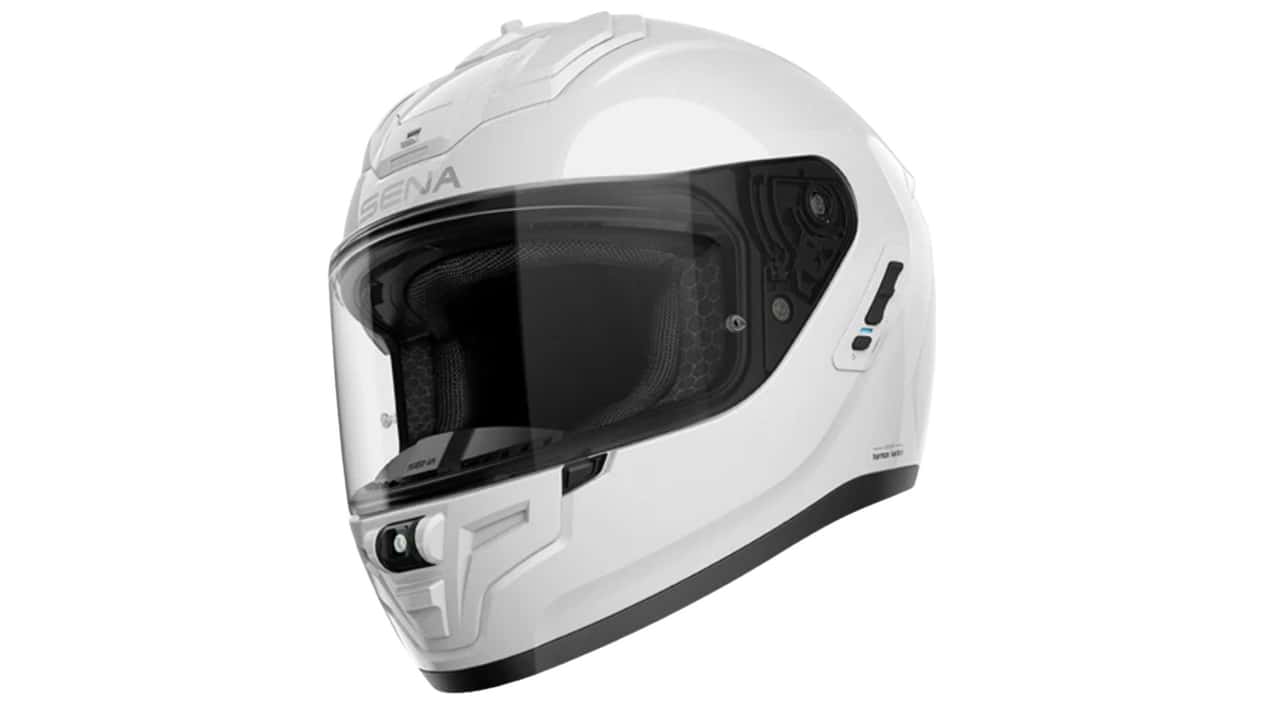
Now they’ve taken it a step further with the Phantom ANC. with active noise cancellation. Same idea as your fancy headphones. Microphones listen to incoming noise, the system creates an opposite sound wave, and the two cancel each other out. In theory, it’s brilliant. In practice, motorcycles are a nightmare environment for this kind of tech.
On a plane, noise is steady. Same with trains. On a bike, everything changes constantly. Speed, head position, windscreen height, your jacket collar, and even how broad your shoulders are. Turbulence is messy and unpredictable. ANC works best with consistent low-frequency noise, not chaotic airflow smashing into your helmet from every direction.


Sena says it’s spent over a decade developing an algorithm that can handle this chaos. The Phantom ANC is supposedly designed from the ground up to make it work, complete with acoustic chambers around the ears to improve passive noise isolation before the electronics even kick in. They claim up to a 20-dB reduction, which sounds huge on paper.
And look, even a small drop in wind noise can be meaningful. Less fatigue, less headache, less that “fried brain” feeling after a long ride. For commuters and tourers, that’s genuinely appealing. But here’s where expectations need to be checked.
This isn’t going to feel like Apple AirPods on an airplane. You’re not going to ride in serene silence, hearing nothing but your own thoughts and the gentle hum of your engine. Wind noise on a motorcycle is just too variable for that. Sudden gusts, dirty air behind trucks, crosswinds, turbulence off your mirrors. ANC can’t magically erase all of that.
So will it be enough to ditch earplugs entirely? Probably not. At least not if you do long highway rides. Earplugs physically block sound across a wide range of frequencies. They’re blunt but effective. ANC mostly targets low-frequency droning. High-pitched noise and sudden blasts still get through. That’s why, even with this tech, serious mile munchers will likely keep their plugs in.
That raises the big question. Is this a lot of tech for a relatively small return? Maybe. At around $650 USD you’re paying premium money for a helmet that promises to make riding quieter, but not quiet enough to fully replace proven hearing protection. For some riders, that might feel underwhelming.
But at the same time, innovation has to start somewhere. Someone has to be first to try weird ideas and see what sticks. Sena is leaning into what it knows best, electronics and communication, and pushing helmet design in a new direction. That alone is interesting.
And honestly, I’m curious. I don’t expect miracles. I’m not expecting monk-level silence or the end of earplugs forever. But if it genuinely takes the edge off long rides and reduces fatigue even a little, that’s a win in my book. So yeah, I’m skeptical. But I’m also willing to give it a shot. Because if anyone was going to try to crack ANC for motorcycles, it was always going to be a comms nerd like Sena.
More Cutting-Edge Tech
RECOMMENDED FOR YOU
Two US Lawmakers Want to Revoke Motorcycle Helmet Laws For People They Don't Represent
Mining Claims Have Already Been Filed For Two Monuments Drastically Reduced By Trump Administration
Helmet Aerodynamics Are Way More Complicated Than You Think
Cars And Trucks Still Kill E-Bike Riders The Most, Says The Actual Data
If You're Going to Buy a Helmet In Case of Bear Attacks, At Least Make It A Motorcycle Helmet
Bajaj Is Making Fancy TFT Dashboards Normal On Cheap Motorcycles
The Touratech Aventuro Gravel Carbon Is a Helmet for Almost Every Situation. And Oh So Light