
Solid-State Batteries Are Still A Future Tech, Not a Present One
Solid-state batteries are always a future technology that's always just out of reach. For now.
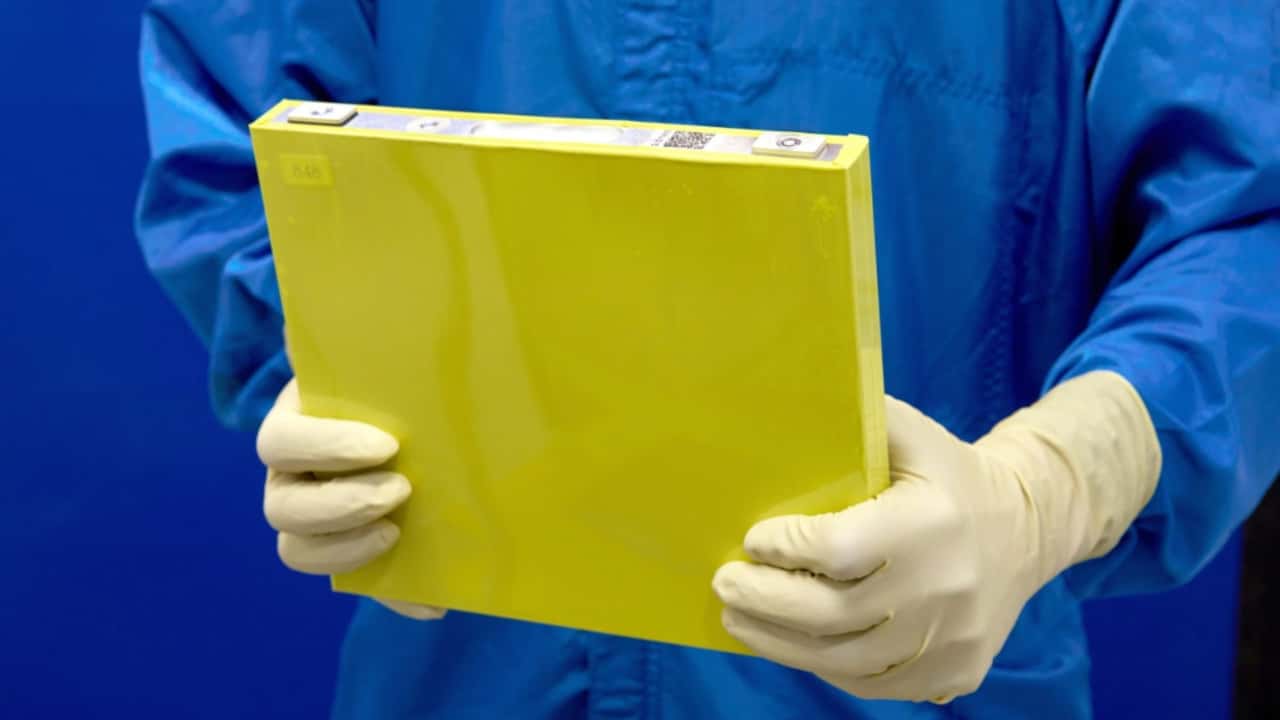

Two technologies have dominated news cycles in recent years: artificial intelligence (AI) and solid-state batteries. Billions have been poured into each, as companies around the world have vied for the title of first this, first that, and getting a product to market faster than their competitors. Neither, however, has lived up to expectations.
AI is basically a Ponzi scheme, with money changing hands in ways that amount to a game of "find the queen," all for a technology that's about as useful as another hole in the head—it's slightly better predictive text, and makes that really annoying coworker think they're god's gift to man because they can prompt a horrendous-looking poster and "do art".
And solid-state batteries are the always-on-the-horizon technology that's set to revolutionize the EV vehicle market, with promises of better range, faster charging, longer lifespans, and oh so much more. But it never comes. It's always tomorrow. It's always next year.
Now, even the folks who are running this business, and stand to lose quite a bit of public and investor support, are saying that solid-state batteries aren't any closer to reality than the Terminator is to being created by some malevolent AGI, as LG Energy Solutions' North American President recently told the press at the company's manufacturing facility launch.
Hype Train
"The problem with solid-state is large-scale production. It has very good energy density, so if you're making a small form factor, you should be able to get there. If you’re making very large form factors, most companies are struggling," said Robert Lee, LG Energy Solution's North America president, speaking to our siblings at InsideEVs. He added, "You will see that in your smartphones probably a decade before you would see it in EVs. I would expect specialized applications first before we’re able to contemplate that as fit for EVs or even ESS."
That's not to say LG and others are stopping research and development of solid-state batteries for electric vehicles. Far from it. But it showcases the disconnect between what is "theoretically" possible with some future solid-state battery electric vehicle and what is possible in reality right now. As well as showcase the issue with scaling production from something like a smartphone to something far larger, like an EV battery.
And it's why many have been skeptical about solid-state EV battery "breakthroughs" in recent years: if companies as large as LG, with the amount of money it's spent on R&D and the brain trust within, can't figure it out, it's far less likely a smaller company with drastically smaller resources would.
So what's all this mean? Well, EV technology will continue to improve. More money will be spent on trying to "crack" solid-state batteries. And more hype will continue to emerge for the always-forthcoming technology. But for now, it's still a future technology, something that could be attained at some point, but not a now thing. We can, however, dream of a better EV world, one where EV motorcycles have 200-plus miles of range, and UTVs have 400 miles of range at the same weight they are today.
At least, that's what I'll do.

RECOMMENDED FOR YOU

Livewire's Tiny EV Mini Bike Is Finally Available At A Dealership Near You
BMW’s Giant Anniversary GS Is Cool, But The Little One Might Actually Matter More
This EV Company Wants You To Bring Your Gas Bike To Its Riding School
Polaris and Minnesota's 4H Want Youth Riders To Be Safe WithUpdated Safety Program
Indonesia Wants People To Buy EV Motorcycles So Bad It’s Literally Offering Them Cash
Yamaha Is Planning Something Big For EICMA 2026. Will We Get The Tenere 900?
LiveWire $17,000 Price Cut Might Be The Deal of The Century. Or a Portent of Doom