
Helmet Aerodynamics Are Way More Complicated Than You Think
It's all about lift reduction.
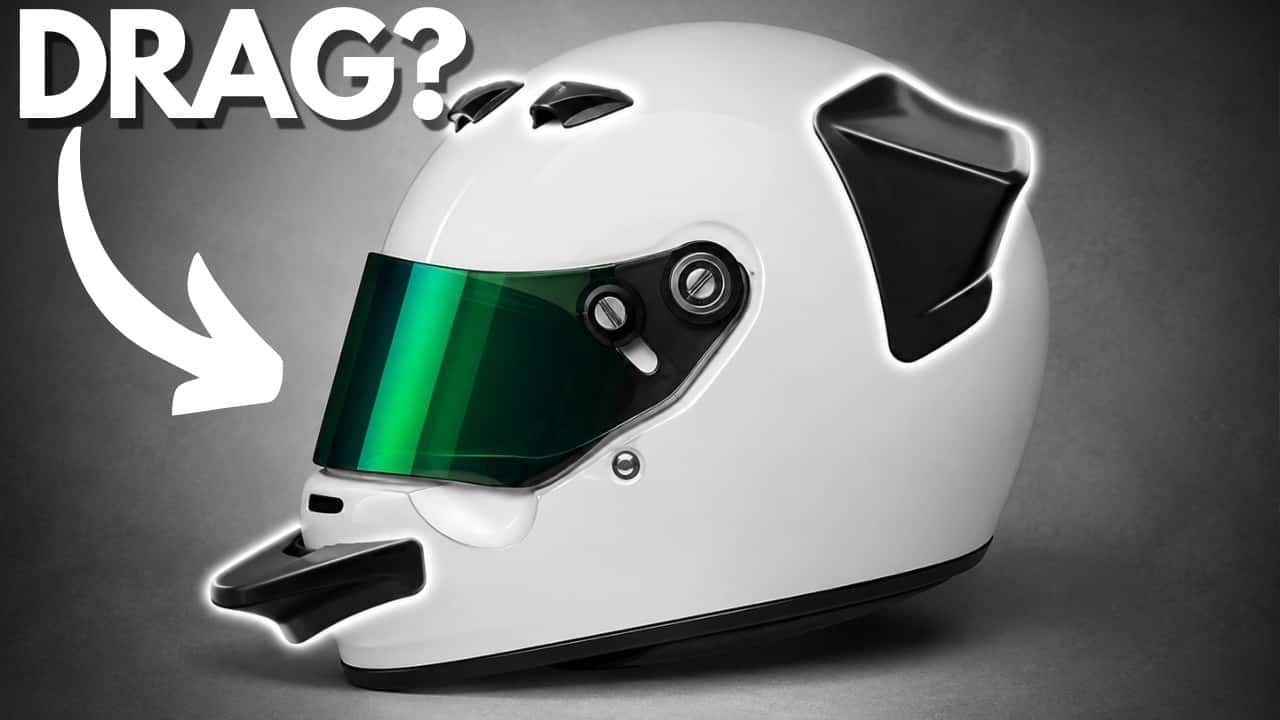

Have you ever had a motorcycle helmet that feels like a sail? Or rather, maybe like a parachute? I have. It's been some time, but I'd be going down the road at some decent clip, find myself turning my head right or left, getting out behind the windshield's safety, and feel like my helmet was trying to lift off my head, taking my chin with it. It was an absolute nightmare for someone as tall as I am.
Most modern helmets nowadays, however, have been aerodynamically sculpted to reduce lift. They've got diveplanes, intakes, and more to reduce the overall lift of the bottom part of the helmet, as its flat surface can, in certain situations, act as a giant freakin' wing. Again, just creeping outside the vortex a windshield makes can be enough to suddenly feel like there's a noose around your neck.
But there's so much more that goes into modern helmet aerodynamics than you'd maybe not believe, as shown by YouTuber Oskar Savicki, who looked at a prototypical karting helmet and went to town to see what works, what doesn't, and how aero affects overall stability. Guess what, those spoilers really help.
Helmets, Helmets, Helmets!
What the YouTuber found through his computational fluid dynamics (CFD) analysis was that when you compared a regular helmet with no aerodynamic flourishes, i.e., a chin spoiler, rear spoiler, and top air intake, the turbulent air around it would make the helmet far less stable and prone to being affected by the air around it. Basically, you'd be bobbing around like a bobblehead in a thunderstorm. But when you have those aero designs, it increases the pressure toward the rider/driver, but that pressure makes the whole thing that much more stable.
Basically, it pushes the helmet down and straight, which means you aren't getting pulled one way or another.
Obviously, Savicki and company only looked at karting helmets and not moto ones. However, the two are pretty damn similar, especially if you start comparing a kart helmet and the helmets run by folks in WSBK and MotoGP. There are some subtle differences, such as length of rear spoiler, intake locations, and the size of the front chin spoiler, but those elements are all present, and they're all designed and engineered to help the rider have increased stability at high speeds and while cornering. The same goes for your road helmet, too, but to a vastly different degree.
Well, almost all road helmets. Those half and quarter helmets are basically just for show.
The one CFD analysis I'd love to see are those of adventure motorcycle helmets complete with the brim. A lot of vents are added to the tops to reduce lift, but those are straight up parachutes if you start going fast while standing. Maybe there's something that could be bettered using this type of analysis? What do you all think?

RECOMMENDED FOR YOU

The Next 'Motorcycle Rider Aid' Might Be The One That Won't Let You Speed
Honda’s Desert-Racing Dirtbike Is Actually A Bargain. You Can’t Have It
onX Wants To Make It Easier To Make Your Voice Heard On Public Land Issues
BMW’s Upcoming R20 Spied. The 2-Liter Monster Went From Concept to Near-Production-Ready
Amazon Wants to Connect Your Phone Everywhere, Whether You Want Them To Or Not
Here's Your Chance To Own A Honda Motocompo For A Bargain. You Can Wear This One, Too
You Don't Need This Givi Accessory... Until You Actually Use It