
Aprilia’s Rainy Test Day Might Actually Matter More Than A Race Win
The first outing of Aprilia's 850cc MotoGP prototype at Jerez signals a major shift in racing philosophy.
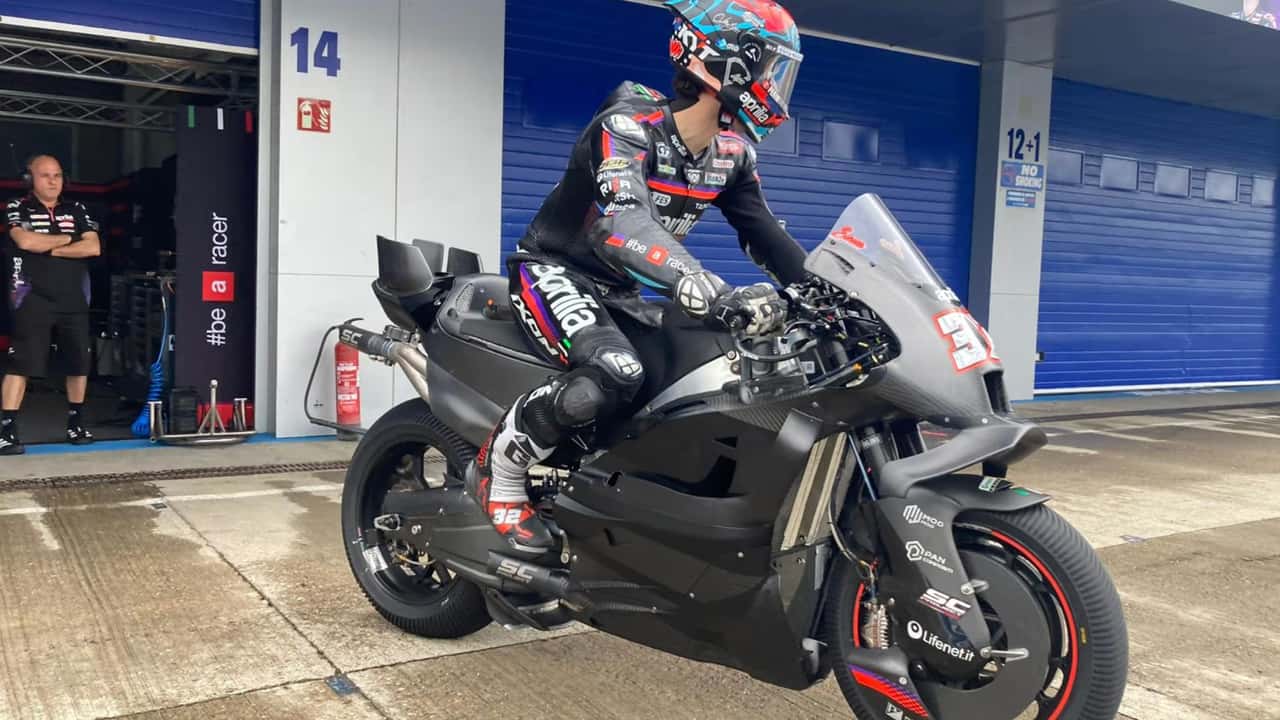

Aprilia rolled out its first 850cc MotoGP prototype this week at Circuito de Jerez, with Lorenzo Savadori doing the honors. It wasn’t some polished, media-heavy debut. It was gray skies, a wet track, and a blacked-out bike doing laps. Honestly, it looked more like a shakedown than a statement. But if you look at the bigger picture for a bit, it’s a pretty big deal.
Aprilia has always been a bit of an outlier in MotoGP. It doesn’t have the same long, uninterrupted premier-class history as Honda or Yamaha, but it’s been building race bikes for decades. The brand made its name in the smaller classes, racking up titles and building a reputation for bikes that are sharp, precise, and actually work with the rider instead of overwhelming them.
That identity matters now more than ever, because MotoGP is about to change in a big way.
The 2027 regulations are basically hitting reset. Engine size drops from 1,000cc to 850cc. Aero gets toned down, so you’re not dealing with massive wings trying to glue the bike to the ground at around 186 miles per hour (300 km/h). Ride-height devices are getting scrapped completely. Tires are switching from Michelin to Pirelli.
And you can already see all of that baked into this Aprilia prototype.
It looks… simpler. If you could even describe it that way. I mean, the fairings aren’t as busy as the outgoing RS GP. The whole thing feels a little less aggressive visually, like it’s not trying to fight physics as much as work with it. That might not sound exciting on paper, but on track, it changes the entire conversation. Less aero means less artificial stability. Less trick hardware means fewer shortcuts. The rider has to do more.
Watching this thing circulate Jerez in the wet kinda drives that point home. There’s no hiding in those conditions. Grip is inconsistent, feedback matters more, and the rider’s inputs are everything. It’s probably the most honest environment you could throw a brand-new prototype into.
If anything, the timing is interesting. KTM already had its 850cc bike out last year with Dani Pedrosa and Pol Espargaró. Honda and Yamaha have also started testing, and Ducati only recently joined in. So yeah, Aprilia isn’t first. But being first doesn’t always mean you got it right.
More From The World Of Racing

Aprilia's new prototype looks slimmer, lighter, and closer to something you might actually find in your garage.
There’s a case to be made that Aprilia’s just taking its time, watching how everyone else interprets the new rules, and building something that actually fits the direction MotoGP is heading instead of forcing its current bike to adapt. And that direction seems pretty clear. Less reliance on tech, more emphasis on feel. Less about extracting performance through devices, more about how the bike behaves underneath you.
That’s the part that actually matters outside the paddock. Because what happens in MotoGP always trickles down. When the series went heavy on electronics and aero, we started seeing more of that thinking in road bikes. Not to the same extreme, but the philosophy carried over. Now, if the top level of racing shifts back toward lighter, simpler, more rider-focused machines, there’s a good chance the bikes we ride follow that same path.

RECOMMENDED FOR YOU
Pecco Bagnaia Moving To Aprilia Is The MotoGP Plot Twist Nobody Was Ready For
Yamaha Will Finally Bring Its Coolest Motorcycle Stateside
Sidecar Racing May Return To The Isle Of Man TT Next Year After Two Horrific Accidents
Take A Look At This Incredibly Rare Japanese Single-Cylinder Race Motorcycle And Tell Me You Don't Want One
Guy Martin Never Won The Isle Of Man TT, But You Can Buy The Bike That Got Him Closest
TVS Isn’t Just Winning India, It’s Building A Global Motorcycle Empire
China's CFMoto Wants Into MotoGP. Might Actually Make It Happen