
Ducati’s Working On an Automatic Clutch You'll Also Want for Racing
The goal is faster launches, more consistent performance, and reduced clutch wear.
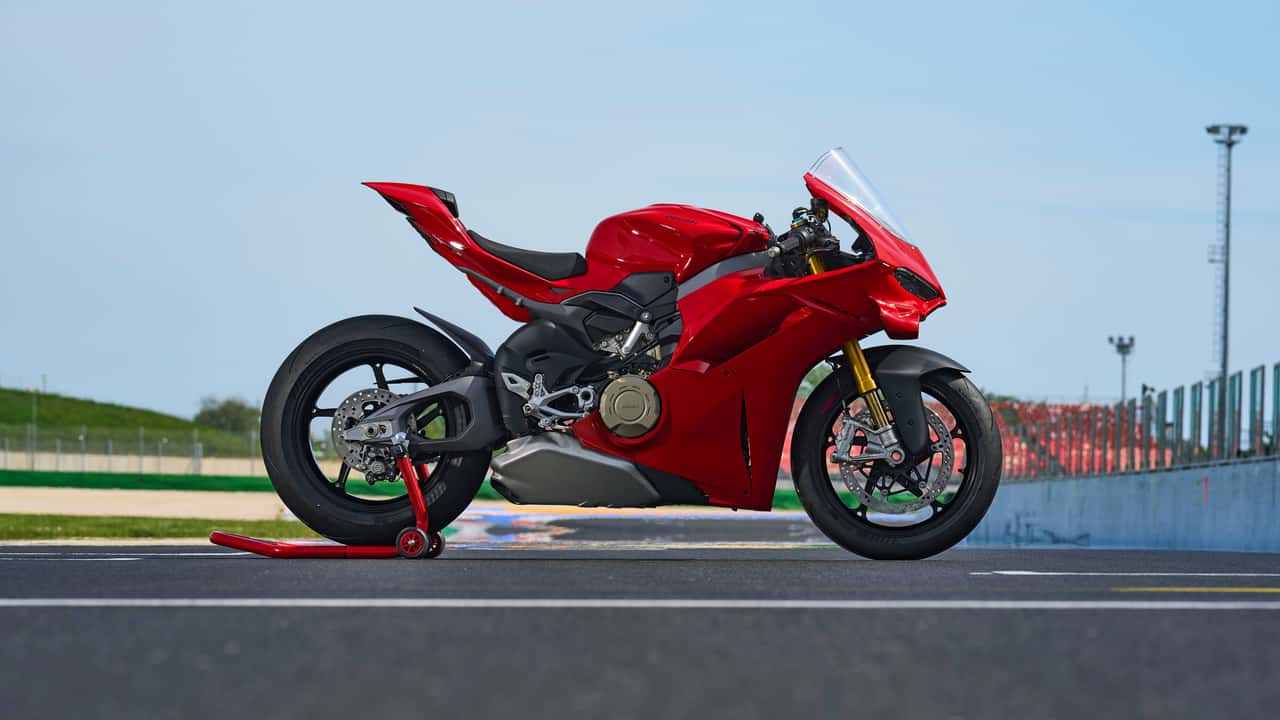

Ducati has always stood at the crossroads of heritage and innovation. It’s a brand that prides itself on performance, yet clings tightly to its roots, even when the rest of the world moves on. Case in point: Desmodromic valves. While modern valve spring tech has made Desmo systems more or less redundant, Ducati still uses them on its flagship machines.
It’s tradition. It’s engineering philosophy.
But even Ducati’s been loosening its grip lately. The V4 Granturismo engine dropped Desmo entirely. So did the new V2 engine found in the Panigale and Streetfighter V2. The sacred cow isn’t quite as sacred anymore.
The same seems to be happening with transmissions. While Yamaha, BMW, KTM, and long-time auto-shifting pioneer Honda have all pushed forward with semi- and fully-automatic tech, Ducati has resisted—at least until now.

The 2025 Ducati Panigale V2 has done away with Desmodromic valves.
First reported by our friends over at Cycle World, patent applications filed by Ducati reveal a clutch automation system that doesn’t completely take the reins away from the rider but adds a healthy dose of convenience and control. Unlike Honda’s Dual Clutch Transmission or MV Agusta’s centrifugal SCS setup, Ducati’s approach automates just the clutch actuation, not the shifting itself.
Think of it as a high-tech helping hand, not a full autopilot.
This design allows the rider to make clutch inputs while a motor can also make inputs whenever it deems necessary.

The system comes in two flavors. The first version works alongside a traditional hydraulic clutch lever. It features a computer-controlled electromechanical actuator—essentially a motor driving a threaded rod inside a ball screw—that moves a thrust rod into the master cylinder, pushing fluid to the slave cylinder. Riders can still operate the clutch lever manually, but the system can step in to operate the clutch automatically when needed, like at low-speed stops or take-offs.
The second version goes a step further. It removes the mechanical link between the clutch lever and the hydraulics altogether. Instead, the lever sends an electronic signal to the control unit, which then tells the actuator what to do. From the cockpit, it still feels like you’re using a manual clutch—except there’s no cable or hydraulic connection. Just sensors and servos doing the work in the background.
This design shows a clutch lever with no mechanical connection to the clutch.
Both versions promise the same benefits: anti-stall protection, smoother starts, less clutch wear, and even a launch control mode that manages clutch and throttle inputs for maximum acceleration. The system also integrates with a load-sensing quickshifter that handles clutch engagement during shifts and rev-matches automatically on downshifts.
But here’s the kicker: this isn’t just about street convenience. Ducati explicitly notes that this system is built with racing in mind. At first glance, that might seem counterintuitive—racing is all about control, precision, and raw rider input. But the truth is, racing has already embraced automatic technology in other forms. Paddle-shifted transmissions are the norm in Formula 1 and endurance racing for a reason—they’re faster, more consistent, and less prone to error.
The goal is to eventually have this tech equipped on WSBK racing bikes.
By developing a road-legal bike with this auto-clutch system, Ducati could homologate it for WorldSBK and MotoAmerica, effectively skirting FIM rules that ban automated clutches unless they’re standard on production models. It’s a clever move—and one that could give Ducati riders a tech edge without breaking the rulebook.
In typical Ducati fashion, it’s not just about making riding easier—it’s about going faster. Smarter. More controlled. And if this system makes its way onto the next generation of Panigales or Streetfighters, it could very well set the tone for the next chapter of sportbike performance.
More Cutting-Edge Tech Innovations
Sources: Ducati via WIPO, Cycle World
RECOMMENDED FOR YOU
Italy's Government Just Granted Ducati Millions For R&D And Keeping The Country's Manufacturing Going
Royal Enfield's One Ride 2026 Is Coming. Here's What You Need To Know
Italian Investment Firm Trying to Buy Ducati Confirms Ducati Isn't For Sale
Triumph Is Developing a New Moto2 Engine. Guess What This Could Mean for the Street Triple
[UPDATE] Italian Investment Firm Says It Offered To Buy Ducati. VW And Ducati North America Say Different.
Europe's Ongoing Drought Just Unearthed a WWII Motorcycle Left In a River
Ducati's CEO On Possible VW Sale: 'We Don't Comment on Speculation'