
Is This Side-By-Side's Infotainment Screen Too Big?
Displays in cars have become overgrown, with many seeing them now as a detriment. Now, that same trend is coming to side-by-sides with Polaris' massive infotainment screen in its new RZR Pro R.

Before taking over RideApart, I spent a decade as an automotive journalist covering all the latest and greatest four-wheeled vehicles on the planet. Bugattis to Hondas, hypercars to minivans, I drove them all. Yet, while power waxed and waned, one constant remained during that time: the ever-enbiggening of the vehicle's infotainment display.
Every time I stepped into a new car, truck, SUV, or sports car, it undoubtedly had a bigger screen than the previous model. It got to the point where screens took over the entirety of the dashboard, stretching from A-pillar to A-pillar, with screens for the driver and passenger, as manufacturers believed that's what everyone wanted. More screens, fewer buttons, more stuff. Yet, that trend is now dying as more folks want physical buttons, fewer distractions, and less in-your-face screens.
A revolt against the digital age of automobiles.
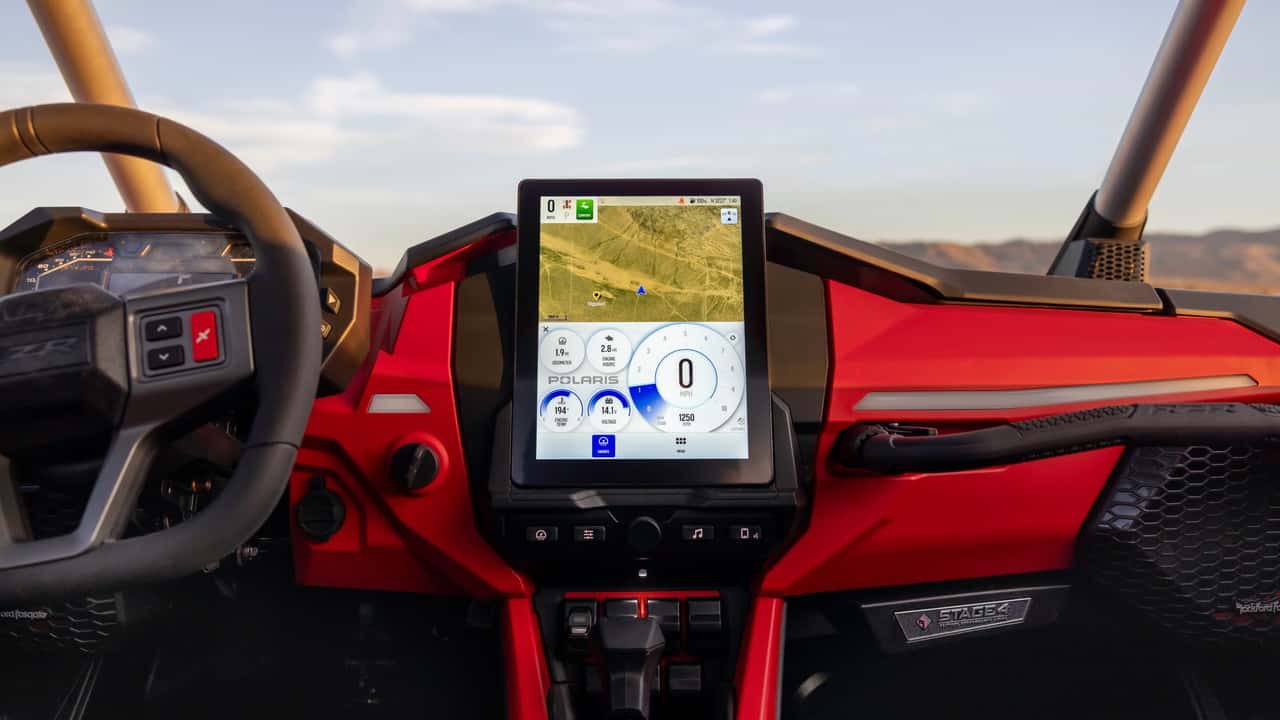
Apparently, no one told Polaris, as the brand's 2026 RZR Pro R has a positively enormous infotainment screen slapped right in the middle of the dash that looks to challenge even the likes of Tesla's notoriously large screens. Damn, that's huge.

2026 Polaris RZR Pro R Infotainment Screen

The Polaris RZR Pro R's screen measures a whopping 8.3 inches high by 6.2 inches wide, giving folks a total area of a whopping 52 square inches. The total display itself, however, is 10.4 inches, making it the largest display on any side-by-side product on the market, and gives "riders more room to map out terrain and access key features without distraction," according to the company.
It's also running the Gen 2 Ride Command software, which Polaris states is "up to eight times faster processing speeds, up to 38 times faster graphic rendering, two times the storage capacity, [and has] two times faster boot time" compared to the Gen 1. Likewise, it can go split-screen which "allows riders to maintain a continuous map view while utilizing other functions on the lower half of the display—helping them navigate and manage their ride with greater ease."
But the question becomes: Does anyone want that?
Adding bigger, brighter, and more screens has almost become a taboo topic among the automotive industry, as physical buttons and knobs return to fashion. Likewise, folks are treating screens and the software behind it with wary eyes, as it's been further detailed how these operating systems are colleting consumer information, with the companies responsible then either selling that data to third-parties or losing it all in tech breaches. I'm not saying that's what's going on with Polaris, but the stigma of others will likely be felt here.
Furthermore, side-by-sides and their off-road ilk are meant to get you away from technology and civilization. I get you don't want to completely turn-off when you're out off-roading or hunting or what have you, and that a little technology can make a good day great or a bad day tolerable. But for those who ride at night, who wants this massively bright screen casting light in the darkness?
For me, I think the screen is too much. But, hey, maybe someone wants this. I know I wouldn't. But to each their own, though.
Get Big
RECOMMENDED FOR YOU
This Polaris Is Trusted By 50 Militaries, And Belgium Just Bought $10 Million Worth of Them
Yamaha Will Finally Bring Its Coolest Motorcycle Stateside
Polaris' New UTV Has More Horsepower Than Subaru's WRX. Rally Nerds, Rejoice
Take A Look At This Incredibly Rare Japanese Single-Cylinder Race Motorcycle And Tell Me You Don't Want One
Polaris Wants To Give Someone $50K. You Just Have To Beat Its Entire Factory Racing Team To Win It
TVS Isn’t Just Winning India, It’s Building A Global Motorcycle Empire
Driving The 2026 Polaris Xpedition Is Good. But I Wanted It To Be More For The Price