
700cc parallel-twin will power Honda scooter, naked, adventure bikes
Honda has released details of a 700cc parallel-twin that will power three new bikes debuting for 2012. The first of those is this maxi-scooter, which locates the engine mid ship, like the segment-defining Yamaha TMAX. There, it’ll be equipped with a second generation version of Honda’s Dual Clutch Transmission. Perhaps tellingly, Honda is touting fuel economy numbers rather than horsepower or ...
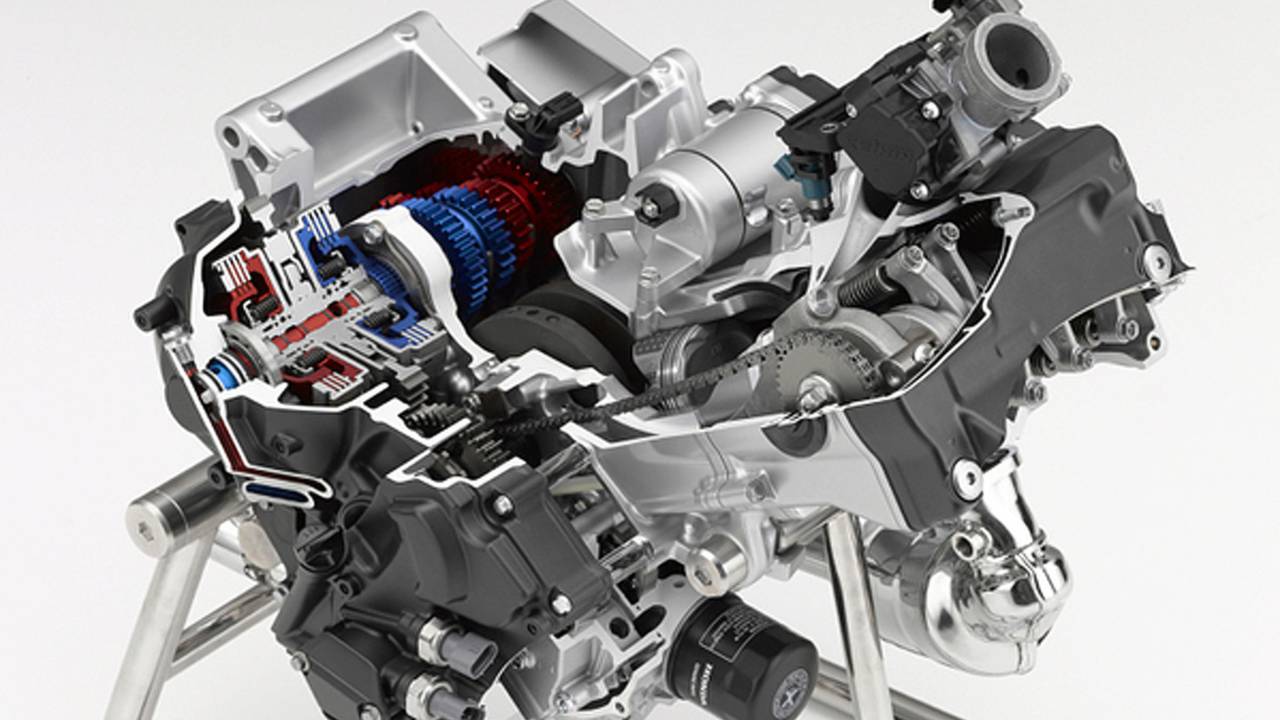

Honda has released details of a 700cc parallel-twin that will power three new bikes debuting for 2012. The first of those is this maxi-scooter, which locates the engine mid ship, like the segment-defining Yamaha TMAX. There, it’ll be equipped with a second generation version of Honda’s Dual Clutch Transmission. Perhaps tellingly, Honda is touting fuel economy numbers rather than horsepower or torque figures, saying it “exceeds 63.5mpg (US).”
The Honda Integra seen here is a production version of last year’s New Mid Concept. It has larger wheels than most scooters which, when combined with that mid-mount engine, should make the riding experience more motorcycle-like. Moving the engine off the swingarm — where scooters traditionally mount theirs — will improve handling and high-speed stability for European and Asian commuters, who will also appreciate the relaxed ergonomics and accessible performance made possible by the feet-forward riding position and that DCT transmission.
Dual Clutch Transmissions, which have been available in performance cars for several years, have a leg up on traditional automated manuals by using a second clutch on alternate gears so the next gear can be engaged before a shift is made. That makes shifts faster and more seamless. DCTs are smaller and contribute less power loss than traditional automatics while behaving much more like conventional manual transmissions than the belts and pulleys of the Continuously Variable Transmissions used on most scooters and the Aprilia Mana.
On the Honda VFR1200 DCT, the 1st gen transmission adds 22lbs of weight and saps an unspecified, but small, amount of power. It works seamlessly and actually makes the heavy VFR easier to control at very low speeds and in heavy traffic, even if its a little less sharp away from the lights than the manual transmission-equipped VFR.
Of performance, Honda only uses the adjective “throbbing” in reference to torque, no numbers have been released. The parallel-twin will be fitted with a 270° crank, which will give it a spaced-out, uneven firing order.
The cylinders on the engine are canted forward at 62°, making it a long, low package. It can be fitted with either that DCT or a conventional 6-speed transmission. Spy photos and patent images suggest that the upcoming naked platform for this engine will share its frame with this scooter. It’s unclear if the much-rumored adventure platform will also share this frame.

The platform-sharing is made possible by the scooter’s unconventional configuration. See all that hard luggage? That’s because the large wheels and mid-mount engine don’t leave much room for a traditional underseat storage space. Despite the bodywork, the Integra’s frame has more in common with motorcycles than it does traditional scooters. The rider straddles the bike rather than placing his feet in a step-through frame.
RECOMMENDED FOR YOU
Honda's New CBR500R Four Might Have China To Thank For Its Existence
This Electric Motorcycle Was Almost Vaporware. Now It Wants To Conquer America
Blink And You'll Miss One Of The Most Legendary Motorbike and Car Pairings Ever For Sale
Not Everyone's Happy About King of the Hammers' New Proposed OHV Trail
This Is Honda's All-New CBR500R Four. And You Can Buy It In Europe
This Giant Scooter Proves Why You Shouldn't Give Up On Your Projects
Honda's Swappable Electric Motorcycle Batteries Could Become Everyone's Batteries