
The Philippines’ Fuel Crisis Is Creating Motorcyclists Out Of People Who Never Wanted Motorcycles
In countries like the Philippines, scooters and motorcycles are rapidly becoming the most sensible way to survive rising fuel costs.

A few months ago, I was daily driving my diesel Toyota Hilux without thinking twice about it. It’s big, comfortable, practical, and honestly perfect for the kind of chaotic roads we deal with here in the Philippines. Back then, I mostly looked at my motorcycles as toys. Weekend machines. A reward after spending an entire week writing stories for you guys to read.
But then fuel prices went completely off the rails after the US-Iran war erupted, and suddenly every trip started feeling like a financial decision. Diesel got hit especially hard here. Prices basically exploded overnight. I found myself looking at the Hilux in my garage less and less, and grabbing the keys to my Toyota Yaris way more often. Smaller engine, lighter car, less painful at the pump. But even that didn’t feel enough after a while.
That’s when the motorcycles stopped feeling like weekend indulgences and started feeling like a solution to a problem that wasn't going away any time soon.

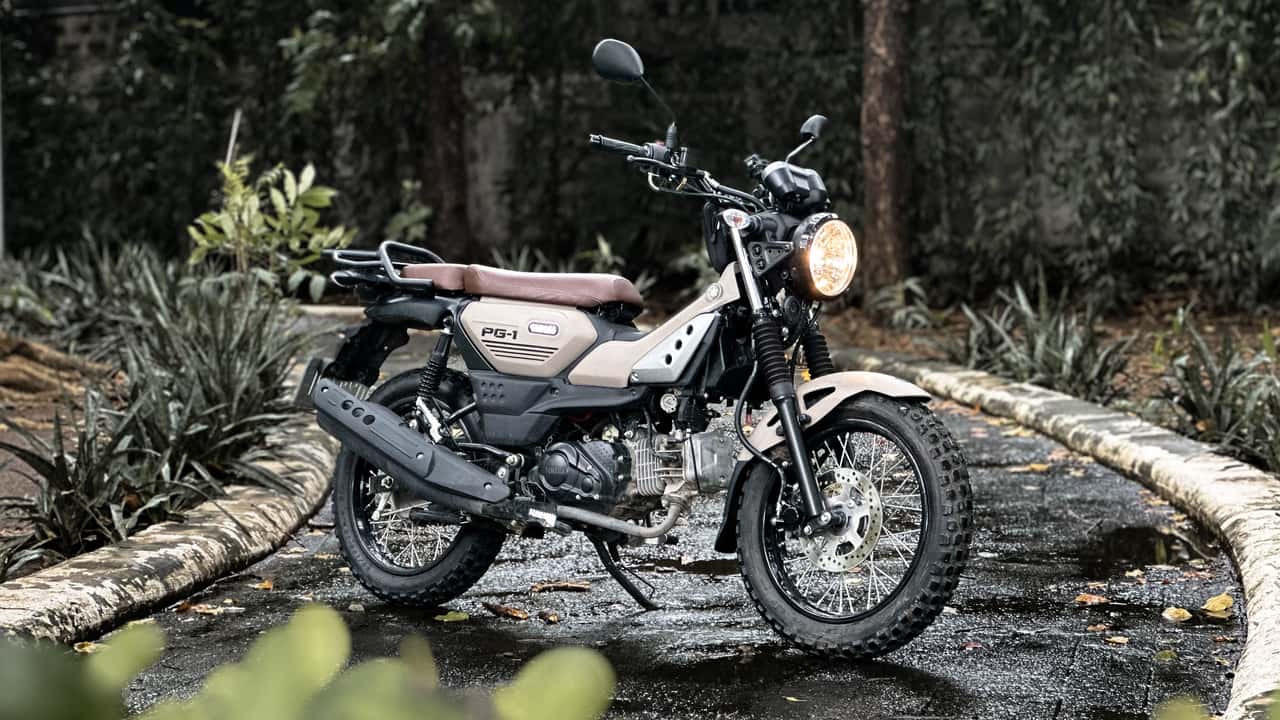
I’m lucky enough to have a Yamaha PG-1 in the garage, and that little thing will easily return around 117 miles per gallon (50 kilometers per liter) without even trying. Meanwhile, my Yamaha XSR900 can manage roughly 70 miles per gallon (30 kilometers per liter) if I behave myself. Which, to be fair, almost never happens because the CP3 engine basically begs you to wring it out every chance you get.
Still, even when I’m riding like an idiot, the XSR900 is dramatically cheaper to run than a pickup truck right now. And I’m clearly not the only one noticing it.
I personally know several people who never even considered motorcycles before this fuel crisis started. These were people who saw bikes as dangerous, inconvenient, impractical, or just something enthusiasts played with on weekends. Now they’re shopping for scooters, small-displacement commuters, and entry-level motorcycles because suddenly the math makes sense.
The Future Of Mobility
All of that boils down to the fact that a motorcycle is one of the few forms of transportation that still feels economically survivable right now. You can fill up a small bike for the same price as a Venti Starbucks Frappuccino. Maintenance is super cheap. Parking is much easier. And traffic becomes less soul-crushing. In dense Asian cities where congestion already wastes hours of your life every week, motorcycles suddenly stop feeling like toys and start feeling like a cheat code.
Now, I know what some of you are thinking. Why not go for an EV?
Sure, electric cars make a ton of sense on paper during an energy crisis. But here in the Philippines, charging infrastructure still isn’t ready for mass adoption. Public chargers exist, but they’re nowhere near widespread enough yet. Condo charging is inconsistent. Long-distance charging still requires planning. And electricity prices aren’t exactly immune from global energy instability either.
Meanwhile, motorcycles are already here. They’re cheap. They’re proven. And in countries across Southeast Asia, two-wheeled transportation has always been deeply woven into daily life anyway. This crisis is just accelerating something that was already happening. The crazy thing is that it’s not even limited to tiny scooters anymore.
Modern motorcycles have become shockingly good. Bikes today are fuel-efficient, reliable, approachable, and easy to live with. Even something with serious performance can still return fuel economy numbers that would’ve sounded completely ridiculous 10 years ago. Manufacturers have gotten very good at squeezing range and efficiency out of relatively small engines without making them miserable to ride.
That reality is now showing up in the sales numbers.
The Motorcycle Development Program Participants Association Inc. says motorcycle sales in the Philippines jumped more than 11 percent in the first quarter of the year, with March posting the strongest growth right as fuel prices started climbing aggressively. Automatic scooters remain the biggest sellers, but business-oriented motorcycles are also booming because delivery riders, small businesses, and commuters are all trying to cut operating costs wherever they can.
And honestly, I don’t think this trend is slowing down anytime soon. But there’s also a very uncomfortable truth sitting underneath all this. And it's the simple fact that war is never good news.
It’s easy to talk about market shifts, changing consumer behavior, and motorcycle sales growth like it’s some fascinating industry trend. But all of this is happening because real people are dying on the other side of the world. Entire economies are getting shaken because global energy supply chains are tied to geopolitical conflict in ways most of us barely think about until fuel prices suddenly double or triple.
So no, this isn’t some weird celebration of motorcycles benefiting from war. If anything, motorcycles are acting more like a pressure relief valve. They’re helping ordinary people absorb rising energy costs without completely losing mobility. In countries like the Philippines and many other parts of Asia, that matters a lot. Because when transportation suddenly becomes unaffordable, it affects everything. Work, food, logistics, daily life. Basically entire livelihoods already working paycheck to paycheck.
And right now, two wheels happen to be one of the few things still making that burden slightly easier to carry.

Source: Manila Bulletin
RECOMMENDED FOR YOU
This Custom Honda Off-Road Trike Is Awesome, And Terrifying
Could This Super Popular Indian Electric Scooter Make Sense In The US?
This Motorcycle Manufacturer Is Showing Why You Need Mechanics In Charge. It Gives Us Hope
Kawasaki Issues A Stop Sale Notice For Turn Signal Recall On Some W230 ABS
This $800 Flex-Fuel Motorcycle Might Be The Most Sensible Bike On Earth. Maybe
KTM Affirms Its MotoGP Future. Comes After Rumored Exit
A Czech Motorcycle Company Just Dropped A 113-Horsepower Bike. But Nobody Knows What To Call It