
This Chopped, Autonomous Polaris Ranger Is Designed to Evacuate Wounded Soldiers and Civilians Alike
Evacuations can be hectic. They can also be dangerous for those driving the equipment needed, which is why Polaris and defense group, Forterra, have designed the CASEVAC, an autonomous side-by-side built to get wounded soldiers and civilians out in a hurry.
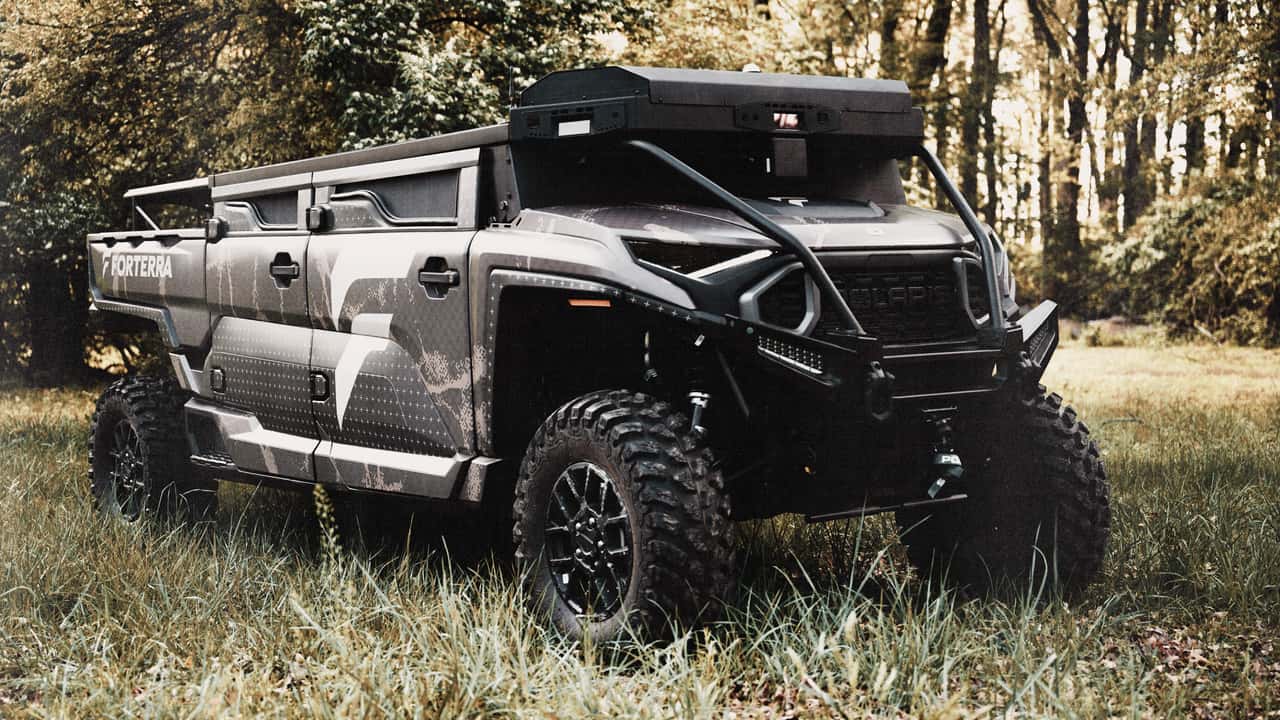

One of the toughest missions within the world's military apparatus is that of evacuations. Not only getting supplies in and out, but getting people, both wounded and not, in and out. It's dangerous work, including for those manning the vehicles designed to do the job. But that's exactly the sort of thing this autonomous Polaris Ranger XD side-by-side was built to do.
Built in conjunction with Polaris Defense, the company's military arm, and Forterra, an autonomous vehicle developer out of West Valley, Utah, just over the mountains from my own home, the design brief was simple: build an autonomous CASEVAC (casualty evacuation) vehicle that could conquer terrain.
The duo landed on the Polaris Ranger XD, the stouter cousin to the standard Ranger, with a better payload and towing capacities, and integrated systems that would work for the intended mission. What's wild is that the whole thing looks like an old-school lead sled, i.e., the roof's been chopped, and all you notice are the half doors that likely hold the access points to the vehicle's internal systems.
Neat.
Semper Fi
According to Forterra, the vehicle is called the Mesa, and was "Built on a factory modified Polaris Ranger XD 1500 platform, the MESA integrates Forterra’s AutoDrive and Vektor mission modules into a scalable system that delivers mobility, compute, communications and sensing at the edge and Polaris’ robust vehicle platform."
The resulting vehicle has a payload capacity of 2,000 pounds and a flat deck, which offers military operations a host of possibilities on the battlefield, including the aforementioned CASEVAC operations, logistics support, heavy load carrying, and more. Furthermore, given it's autonomous, you don't need a driver, which is one fewer person to potentially be injured, and one fewer person to worry about.
"Our MESA vehicle brings together the core elements of autonomous mission execution and OEM manufacturing into a single, deployable platform," said Pat Acox, Vice President of Defense Growth at Forterra, adding, "Because MESA is built in direct partnership with Polaris, every vehicle comes off the same market-leading production line that delivers Polaris platforms globally, with all modifications executed alongside the OEM. This results in a more robust, fully integrated platform without aftermarket changes to the base vehicle chassis."
To that end, due to the extensive aftermarket and parts support for the Polaris Ranger platform, it makes field fixes all the easier. You're not hunting around for a part no one has ever heard of or can't make or fix easily when things go sideways or something gets broken during a mission. It's basic stuff.
The Mesa debuted only this week at the Modern Day Marine expo, and was shown off after a number of branches of the U.S. Military put out a call for "last-mile" CASEVAC options and unmanned ground vehicles. This is basically a proof of concept for both Polaris and Forterra, though both already have extensive government contracts within the space.

RECOMMENDED FOR YOU

Polaris Wants To Give Someone $50K. You Just Have To Beat Its Entire Factory Racing Team To Win It
[UPDATE] Italian Investment Firm Says It Offered To Buy Ducati. VW And Ducati North America Say Different.
Driving The 2026 Polaris Xpedition Is Good. But I Wanted It To Be More For The Price
Stark Drops Factory Editions of VARG MX and EX Dirt Bikes. Major Suspension Upgrades
There's An AI-Powered, Autonomous Polaris Ranger On the Front Lines In Ukraine
Hero’s Ather Investment Is Booming While Its Zero Stake Has Fallen Off A Cliff
Polaris Gave Another $200,000 to Safeguard OHV Access. And Partnered With the National Forest Foundation