
Outgoing BRP CEO Says Future Growth Lies Outside the United States
Trade uncertainty and market saturation are pushing BRP to chase growth beyond North America.
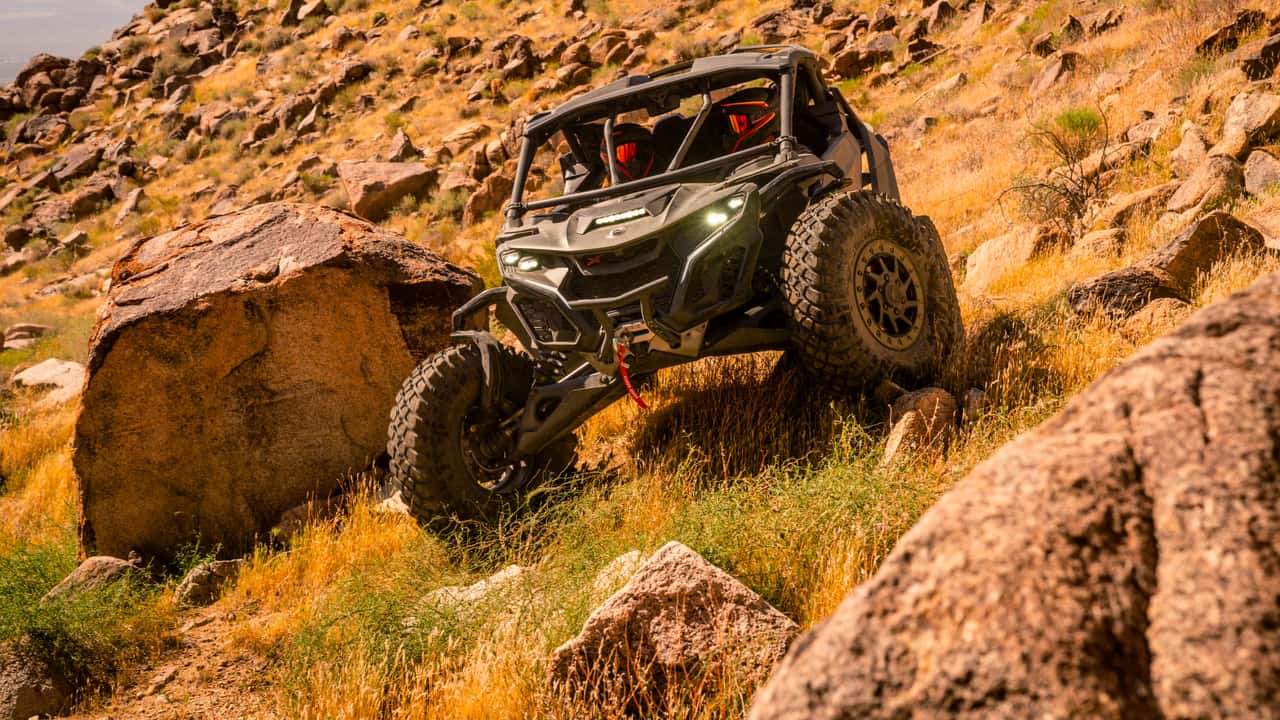

BRP has always been a little bit different from the usual powersports giants. Less corporate, more mud-on-the-boots. That’s largely because for more than two decades, it was run by someone who actually rode the machines. Now, as longtime CEO José Boisjoli heads for retirement, his parting words land with a bit of weight: the future of BRP’s growth probably isn’t centered on the United States anymore.
And that's not necessarily because the US doesn’t matter anymore, but because the next wave of riders, buyers, and opportunities is forming elsewhere.
This perspective comes from a wide-ranging profile first reported by The Canadian Press, and it reads less like a victory lap and more like a reality check. North America is mature, dealers are cautious, and big-ticket recreational toys are harder to move when interest rates are high and uncertainty hangs in the air. BRP still makes most of its money in the US, but growth there has become a grind rather than a sprint, and that changes how a global brand has to think.

Boisjoli’s argument is simple and, frankly, hard to dispute. If you want real expansion, you go where the market is still developing. Places like Brazil, parts of Europe, the Middle East, and large chunks of Asia aren’t saturated yet. PWCs, UTVs, and ATVs are still novelties in some of these regions, not default weekend toys. For BRP, that’s an opportunity to shape riding culture from the ground up instead of fighting for inches in a crowded showroom.
Trade politics only reinforce that thinking.
BRP builds much of its hardware in Canada and Mexico, then sells heavily into the US. As long as trade agreements hold, that’s fine. If they don’t, costs go up fast, and not in ways riders ever see coming. Tariffs don’t make machines better. They just make them pricier. Expanding production and demand outside the US is as much a defensive move as it is an ambitious one, and it’s hard to blame BRP for wanting insurance.
There’s also a refreshingly blunt take on electrification woven into this moment. BRP has electric sleds, bikes, and ATVs now, but nobody inside the company seems under the illusion that EVs are saving the business anytime soon. They’re expensive, niche, and slow to scale. Still, BRP is sticking with them because learning early beats scrambling later. It’s not hype-driven optimism. It’s cautious, slightly cynical pragmatism, which is quite frankly, more trustworthy.
Last but not least, leadership is changing, too. Incoming CEO Denis Le Vot comes from the automotive world, which could either sharpen BRP’s global strategy or dilute its rough-edged charm. That tension sits at the heart of this transition. BRP is bigger, more international, and more exposed than ever, but it still trades heavily on authenticity. The hope is that as growth pushes farther abroad, the company doesn’t forget why people fell in love with its machines in the first place. Because no matter the market, riding still needs to feel like riding.

Off The Beaten Path
Source: The Canadian Press
RECOMMENDED FOR YOU
Can-Am's Defender UTV Just Got Even More Utilitarian, And For Good Reason
Will Honda's New CB400 Super Four E-Clutch Win Over Modern Riders?
Can-Am Went For Car-Style Concepts, And They Could Preview Future Product
Ex-MotoGP Rider Thinks British Passports Are Holding Back Some Racers
This Mid-Travel Kit Makes the New Can-Am Defender HD11 the Perfect Backcountry Companion
Indonesia Wants People To Buy EV Motorcycles So Bad It’s Literally Offering Them Cash
Can-Am's Weird Electric Car Patent Is Back And More Detailed Than Ever