
This Hybrid Airplane Actually Uses a Supercharged Kawasaki Superbike Engine
Kawasaki's supercharged superbike engine powers all manner of machines. And while its motorcycle and side-by-side offerings are the most well-known, this hybrid airplane wants in on the fun, too.

Kawasaki's H2 engine is all the rage lately. Between it having a starring role in Top Gun: Maverick in the brand's Ninja H2 superbike platform, to powering insane drones, and more recently, setting fire to the dunes in Kawasaki's all-new Teryx H2 side-by-side. The latter of which broke RideApart's Kyra Scadalan's brain.
There was also that horse...
But the supercharged, 999cc superbike engine has a habit of being known as a pretty solid platform to build off of. After all, if you can supercharge and throw 34 pounds of boost at it, you can probably do a lot more with it if you pay attention to your engineering. What, however, is the limit? We know the sky ain't it, as the drone is a VTOL type of machine. But what about it powering something that'll take people, live, human, people like you and me, to those same skies?
Would you trust a motorcycle engine, even one so properly insane as the Kawasaki H2 motor, to your safety in flying the friendly skies? Well, the French aviation startup, VoltAero, hopes to convince you that it is. And the company's hybridizing the supercharged engine, too.


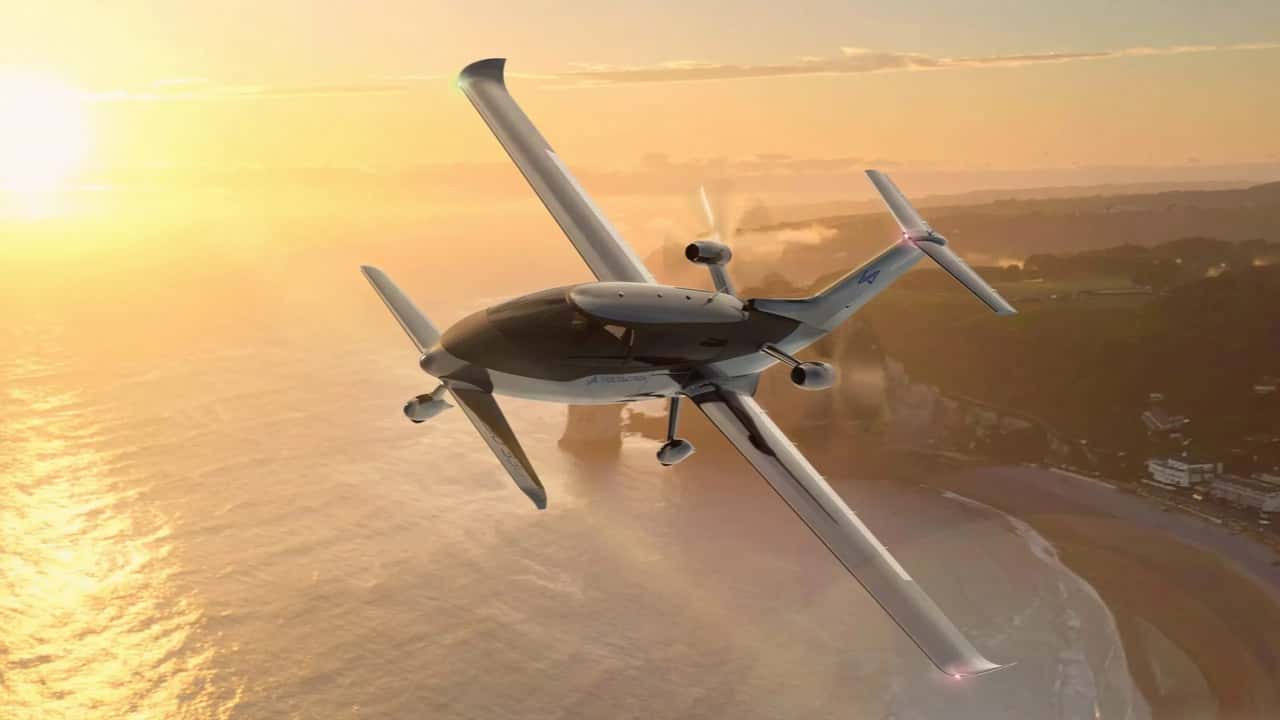
The plane in question is VoltAero's Cassio 330, and utilizes a modified Kawasaki H2 engine complete with a series-hybrid system. For those who aren't up-to-date on their hybrid terminology, a series-hybrid system is actually one of the first hybrid systems ever invented, all the way back in the early 1900s. The system works by having the vehicle be electrically powered, i.e. the propulsion is electric in nature, but uses a gasoline engine to then funnel electrons back into the battery and the vehicle's motor.
Think of a series-hybrid as your friendly home generator in a big snow storm. Your home doesn't run off it at all times, but when the city's power is depleted, it switches on to bring you light!
As for the powertrain itself, the twin engines "provide a maximum power of 150 kW (201 horsepower), along with a 60-kW (80 horsepower) electric motor [per powertrain]. In typical operation, the thermal engine delivers baseline propulsive power, while the electric motor kicks in during high-power demand situations, resulting in shorter takeoff distances, enhanced obstacle clearance and significantly increased cruise speeds."
The company adds, "The supercharged H2 SX is derived from its utilization on Kawasaki’s iconic Ninja H2 SX sport motorcycle, tailoring this proven high performance, four-cylinder in-line engine for airplane applications. It uses electronic fuel injection, and has an estimated TBO (time between overhaul) of 1,500 hours."
As for the aircraft itself, VoltAero states that the Cassio 330 will have seating for six people, including the pilot, and is designed for private pilots, as well as charter companies, commercial units, cargo flights, and even "medevac applications." The plane itself will supposedly have a top speed of 206 MPH (180 kts), a max range of 745 miles (1,200 km), and an operating altitude of just 12,000 feet.
Likewise, the company is aiming at producing about 150 aircraft each year, once everything is up and running. And it's currently accepting reservation holders, though the pricing for each aircraft, as well as a solid timetable for production has yet to materialize. That said, who wants a twin Kawasaki H2 motor-powered airplane to split with me?
Planes and Trains and Automobiles
RECOMMENDED FOR YOU
Kawasaki Versys 900 Spied Testing in the Wild. New Team Green Bike Incoming
This Mid-Travel Kit Makes the New Can-Am Defender HD11 the Perfect Backcountry Companion
We Just Found Kawasaki's Robot Horse Patent Drawings. They're Full Of Insane Details
Riding To Mr. Beef, The Real-Life 'The Bear' Location, on a Royal Enfield Guerrilla 450
Kawasaki Unveils 2-Seater Teryx H2 UTV. It's Still Supercharged Insanity
Here's Why Polaris Is Working on Autonomous Side-By-Side Systems
Kawasaki Hid A Naked Superbike Under Its Best Retro Paint Yet