
Is MotoGP’s New Safety Regulation Putting Riders in More Danger?
The new "non-running bike" restart rule could incentivize riders to hug a bike as it careered across the track to save precious time during qualifying. But at what cost?
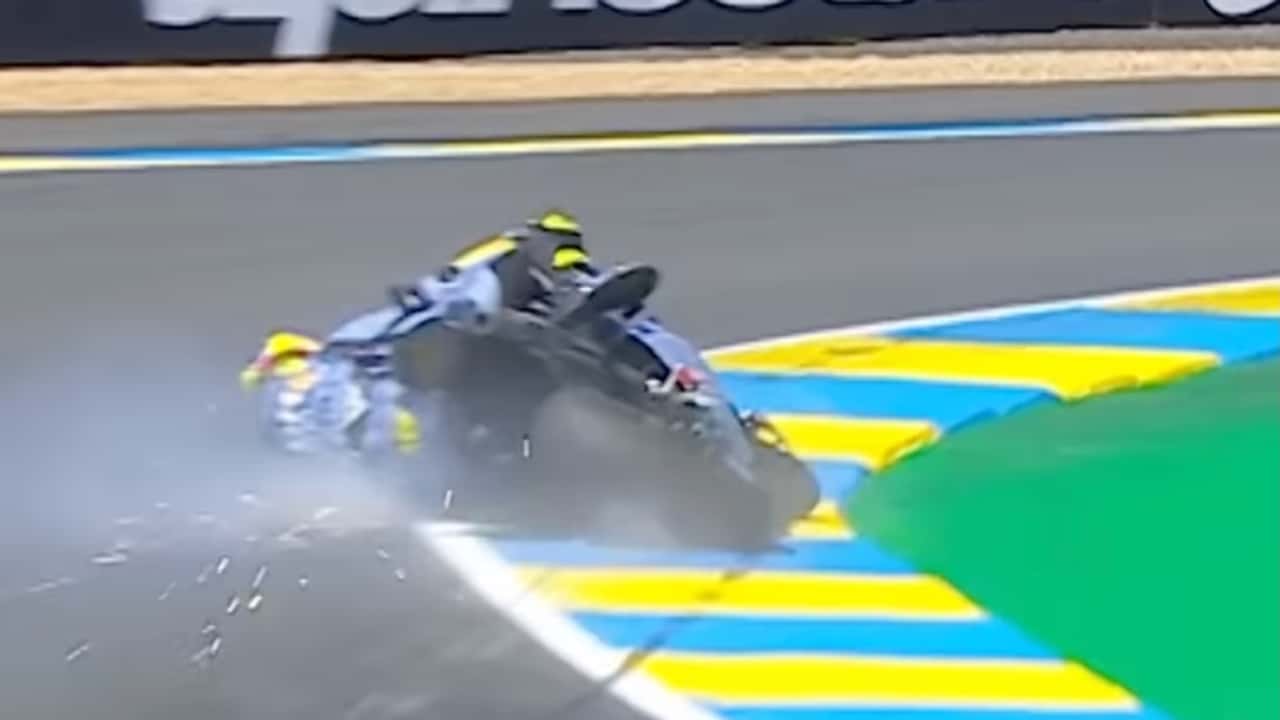

A new MotoGP safety rule came into practice this year. The rule essentially means that any fallen machine with a stalled engine must be moved to a service road before attempting to restart the engine. Previously, if the bike was in working order after going down, riders would get a push to bump start the bike from the marshals, but officials decided this was too dangerous for the marshals. Unfortunately, the decision might put riders in more danger and lead to more crashes in the manner that took the life of one of MotoGP's brightest stars, Marco Simoncelli.
Often cited as the triggering incident for this rule change was Alex Rins's off at Mandalika during qualifying in 2025. Rins crashed toward the end of qualifying and took a long time to get his Yamaha going with the help of the marshals, which elevated the risk for everyone involved while a qualifying session was in progress.
If another rider went off, he could have injured Rins and/or the people helping him. MotoGP says the point of the new "non-running bike" restart rule is to "minimize the exposure of track marshals to danger." But this past race weekend, at Le Mans, we saw how the rule could encourage riders to hold on to a bike after it has essentially crashed, so they can hold the clutch, pick it up, and resume the session straight away.
All Things MotoGP
Fermin Aldeguer lowsided his Ducati last weekend during Friday's practice, but instead of letting it go and sliding into the gravel, he hugged it and let it drag him across the track, causing the rider behind to take evasive action. Holding on to a bike like this and letting it pull you across the track is eerily similar to the way MotoGP lost Simoncelli. You can check out the crash below.
To be fair, riders keeping the clutch pulled after going down isn't new, and the current world champion has made it work for him plenty of times. But this instance at Le Mans was so clearly incentivized by the new rule that it's worth considering if riders will put themselves in more danger by holding on during crashes when they might otherwise have let go and bump-started the bike previously.
We should also consider at what point during a race weekend riders are most incentivized to keep the bike running so they can hop straight back on: qualifying. More crashes happen during qualifying than during the race, even though the combined length of both sessions is less than a full race. Riders are pushing hard with no time to spare to go down service roads to rejoin, and others behind them are pushing just as hard and have very little time to react to a bike careering across the track.
None of this is to say the old rule was safer, but rather to acknowledge that MotoGP riders will look for every advantage and the current ruleset might incentivize riders to hold on at time they previously would've conceded defeat and tried to bump start the bike. It's food for thought and our comment section below.

RECOMMENDED FOR YOU

Sidecar Racing May Return To The Isle Of Man TT Next Year After Two Horrific Accidents
Bimota Fans Can Finally Buy The Iconic Italian Dream Machines on American Soil
Guy Martin Never Won The Isle Of Man TT, But You Can Buy The Bike That Got Him Closest
It Took Norton 100 Prototypes To Get Its New Manx R Superbike Right
China's CFMoto Wants Into MotoGP. Might Actually Make It Happen
India’s EV Motorcycle Startup Is Already Selling More Bikes Than Harley-Davidson's LiveWire
Want A New Beta Dirt Bike? Why Not Go Racing And Save A Bunch Of Money?