
BMW’s New F 450 R Is The Bike The Old G 310 R Always Wanted To Be
It’s faster, smarter, better equipped, and considerably more serious.
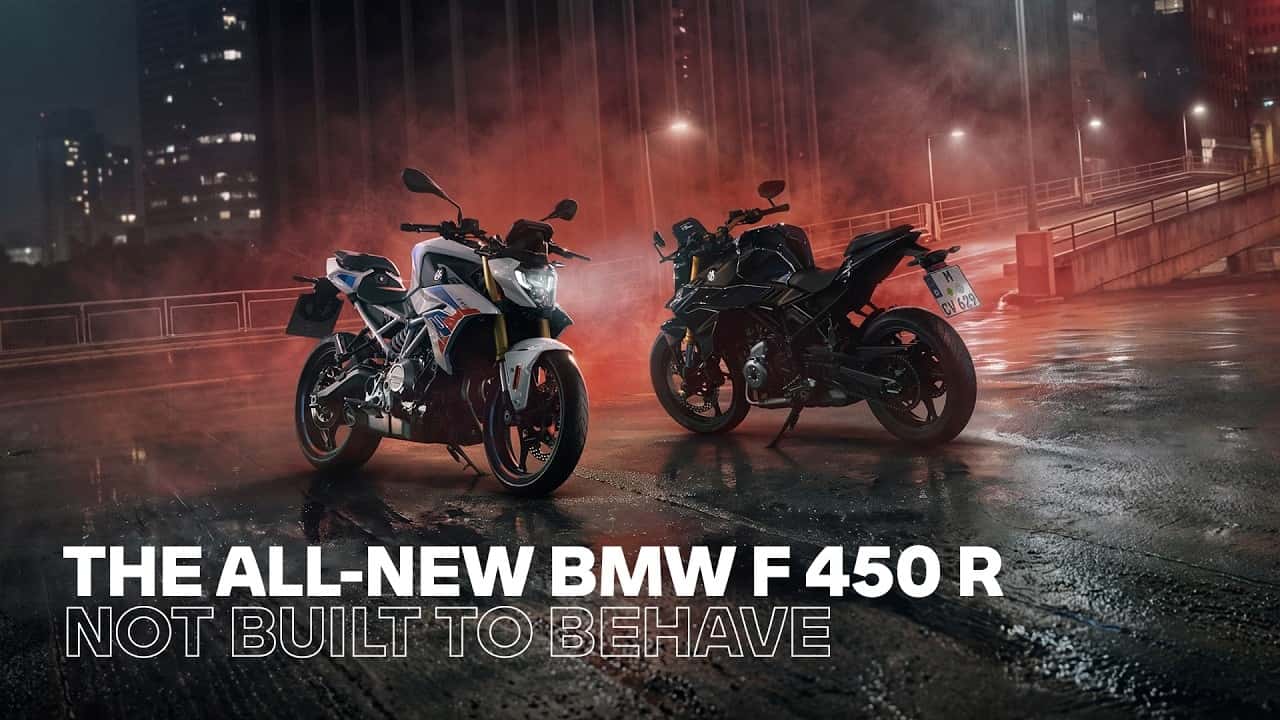

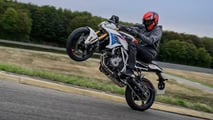
BMW’s been wasting absolutely no time getting its money’s worth out of its new 450 platform. The F 450 GS gave us the first look at BMW’s new 420cc parallel twin, and now the company has officially chopped away the adventure-bike bits and turned the same basic recipe into the F 450 R. And after looking at it for a while, I’ve arrived at a highly technical conclusion: yep, there’s still some of the old G 310 R in there.
BMW would probably prefer you looked further up the family tree. The company says the F 450 R follows the design language of the S 1000 R, and that’s certainly visible in the angular headlight, sharp bodywork, and generally angrier expression. But pull back a little and the proportions are awfully familiar. Compact tank, short tail, upright naked-bike stance, exposed mechanical bits underneath. It doesn’t look like a G 310 R copy, but you can definitely tell the two bikes share a surname.
That comparison becomes considerably less flattering to the old G 310 R once you start looking at numbers.

The Small Bike Era Is Here
The G uses a 313cc single-cylinder engine producing 34 horsepower and 20.6 pound-feet of torque. The new F 450 R gets a 420cc parallel twin pumping out 48 horsepower at 8,750 rpm and 32 pound-feet at 6,750 rpm. BMW also says 80 percent of that torque is available from just 3,000 rpm.
It isn’t carrying much more baggage, either. BMW lists the F 450 R at around 386 pounds ready to ride, versus roughly 362 pounds for the G 310 R. So for an extra couple dozen pounds, you’re getting another cylinder, 14 more horsepower, substantially more torque, and a motorcycle that’s playing in an entirely different performance bracket.
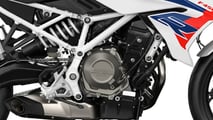
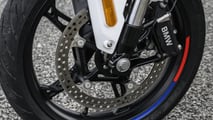
Then there’s the chassis and electronics. The F 450 R uses the F 450 GS’s tubular steel frame concept, recalibrated specifically for road use, with a 43mm KYB inverted fork and an aluminum swingarm. Rain, Road, and Dynamic riding modes come standard, along with ABS Pro, Dynamic Traction Control, Dynamic Brake Control, and engine drag torque control. Higher trims add adjustable sport suspension, Shift Assistant Pro, and more electronics.
The fanciest F 450 R even gets BMW’s Easy Ride Clutch. Paired with Shift Assistant Pro, it can handle clutch engagement when pulling away and stopping while also letting you shift without touching the clutch lever. BMW still leaves the lever there in case you actually want to use it, which seems reasonable considering some of us apparently enjoy operating motorcycles ourselves.
There’s also a 6.5-inch TFT display, three available seat heights, and four equipment levels ranging from the basic F 450 R to the M Sport with Innovation Package. At this point, calling it a replacement for the G 310 R almost undersells what BMW has built. The two occupy a similar entry-level roadster space, but the F 450 R has considerably more performance and technology behind it.
BMW F 450 R
BMW G 310 R
And yet, I still see the G 310 R.
That isn’t necessarily a bad thing. The G was a friendly, uncomplicated little roadster that made BMW ownership accessible without pretending to be something it wasn’t. The F 450 R basically takes that same broad idea and gives it the engine, chassis, electronics, and attitude it always deserved.
So maybe that resemblance is appropriate. The F 450 R doesn’t need to erase the G 310 R from BMW’s family album. It just looks like the kid came back from college considerably faster, noticeably angrier, and with an M Sport package.
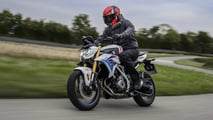



Source: BMW Motorrad
RECOMMENDED FOR YOU
BMW Just Built A 218-HP Naked Bike Because Apparently The M 1000 R Wasn't Crazy Enough
Suzuki Just Resurrected Its Legendary K5 Engine And Stuffed It Into A New Sportbike
You Totally Want A BMW M1000R ATV, And These Guys Make Your Superbike Quad Dreams Real
Did Zero Motorcycles Just Crack The Future Of What The Kids Actually Want In A Motorcycle?
BMW Recalls Some R 18s Over Potential Fire Risk From Optional Reverse Gear
Ducati Somehow Made the DesertX V2 More Capable Off-Road For 2027
BMW's New F 450 RR Is Here And It Looks Awesome